
Risk Is Not Reduced by Being Confident
Confidence often feels like control, but it does not change exposure. This article explains why conviction does not reduce risk, how overconfidence distorts position sizing, and why professionals separate belief from probability.
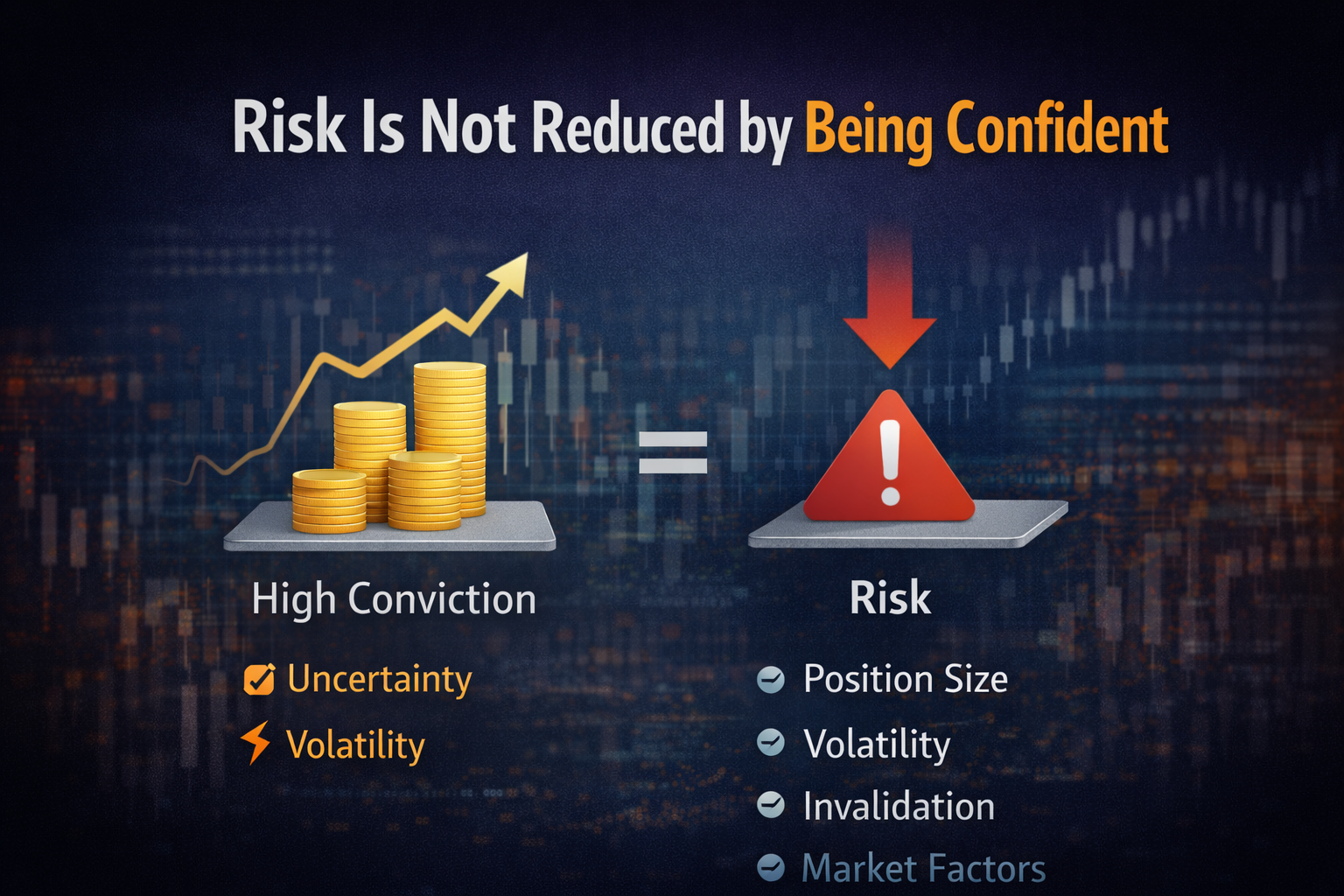
Confidence feels like control. When a trade idea aligns with analysis, higher timeframe structure, and indicator agreement, conviction increases. Many traders subconsciously translate this conviction into reduced perceived risk. Professional traders understand that confidence changes nothing about exposure.
Risk is defined by position size, volatility, structural invalidation, and market conditions. It is not defined by belief. A highly convincing setup and a mediocre setup both expose capital to uncertainty. The difference lies in probability distribution, not in the removal of downside.
Overconfidence becomes dangerous when it alters behavior. Traders increase size because a setup feels strong. Stops are widened because conviction is high. Additional positions are layered because agreement across tools appears overwhelming. In each case, exposure expands while the market remains uncertain.
Markets do not reward conviction. They respond to participation, liquidity, and structural dynamics. Even high-quality setups fail. When traders equate confidence with safety, they underestimate the impact of variance.
Professional traders separate analysis from execution discipline. A trade may be rated as high quality, yet risk parameters remain consistent. Position sizing is determined by portfolio constraints and volatility, not emotional certainty. This separation prevents single trades from disproportionately influencing performance.
Confidence also narrows perception. When traders feel certain, contradictory information is discounted. Structural warning signs are rationalized, and shifts in participation are ignored. What begins as confidence gradually becomes rigidity.
A useful distinction is between conviction and probability. Conviction reflects how strongly a trader believes in an idea. Probability reflects statistical expectation within uncertain conditions. The two are not equivalent. Increasing conviction does not mathematically improve outcome distribution.
Risk management exists precisely because markets are unpredictable. If confidence reliably reduced risk, risk frameworks would be unnecessary. The existence of risk management is itself acknowledgment that conviction cannot eliminate uncertainty.
ChartDetector reinforces this professional separation by evaluating structural conditions and risk independently of directional bias. A signal may align across metrics, yet volatility or structural fragility may still demand controlled exposure.
The goal is not to eliminate confidence. Confidence supports decisive execution. The objective is to prevent confidence from modifying risk discipline. When risk remains stable regardless of emotional state, performance becomes more resilient.
Before increasing exposure on the next high-conviction trade, consider whether the market has changed or only your level of belief. Risk responds to structure, not to confidence.
Related Articles

Why Markets Punish Consensus
When everyone agrees on where the market is going, the opportunity is often already diminishing. This article explains why consensus creates comfort but rarely creates edge, and why professional traders pay close attention to crowd positioning.
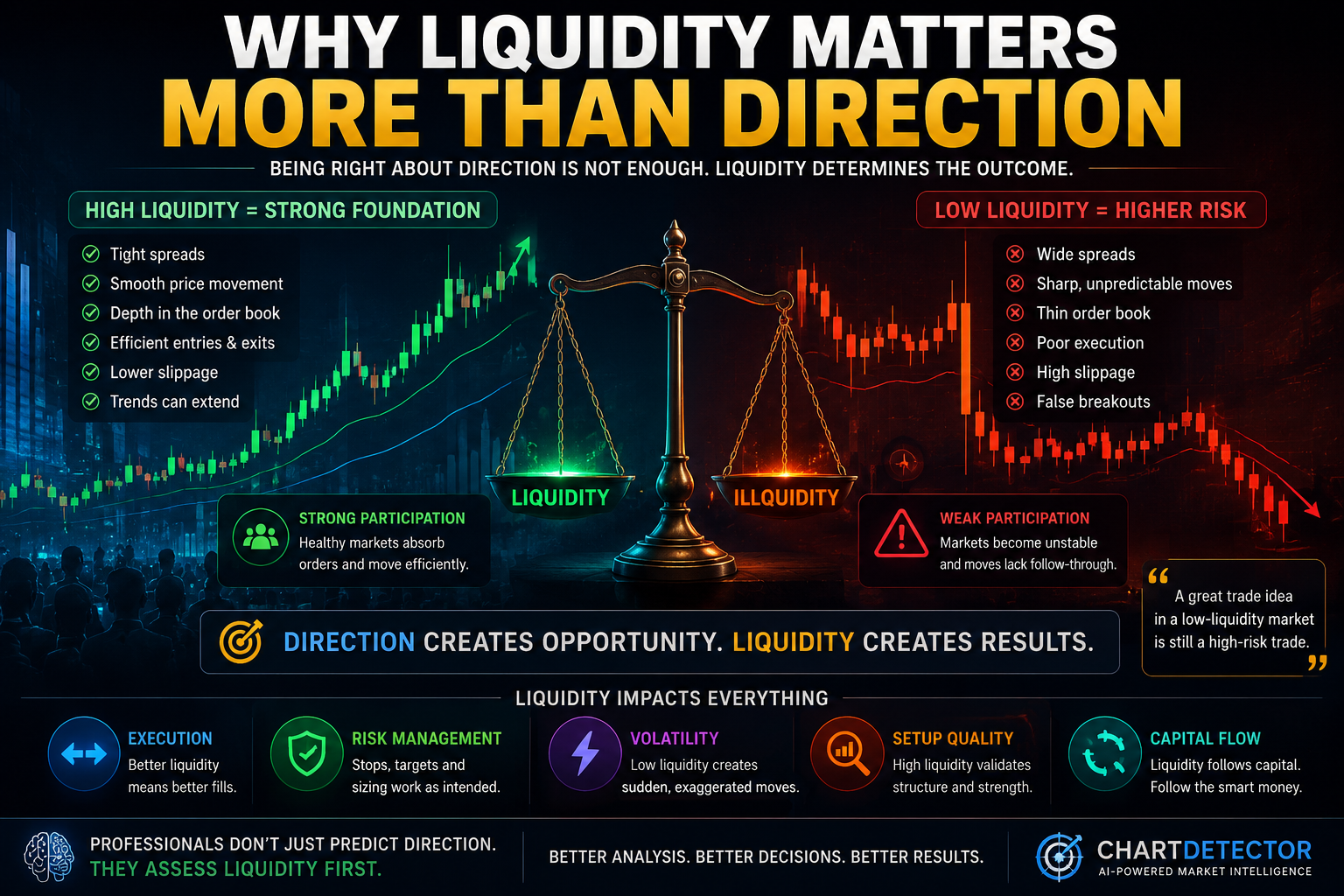
Why Liquidity Matters More Than Direction
Most traders focus on whether a market will move higher or lower. Professional traders focus on liquidity. This article explains why liquidity drives price movement, how it influences risk, and why being right about direction is often not enough.
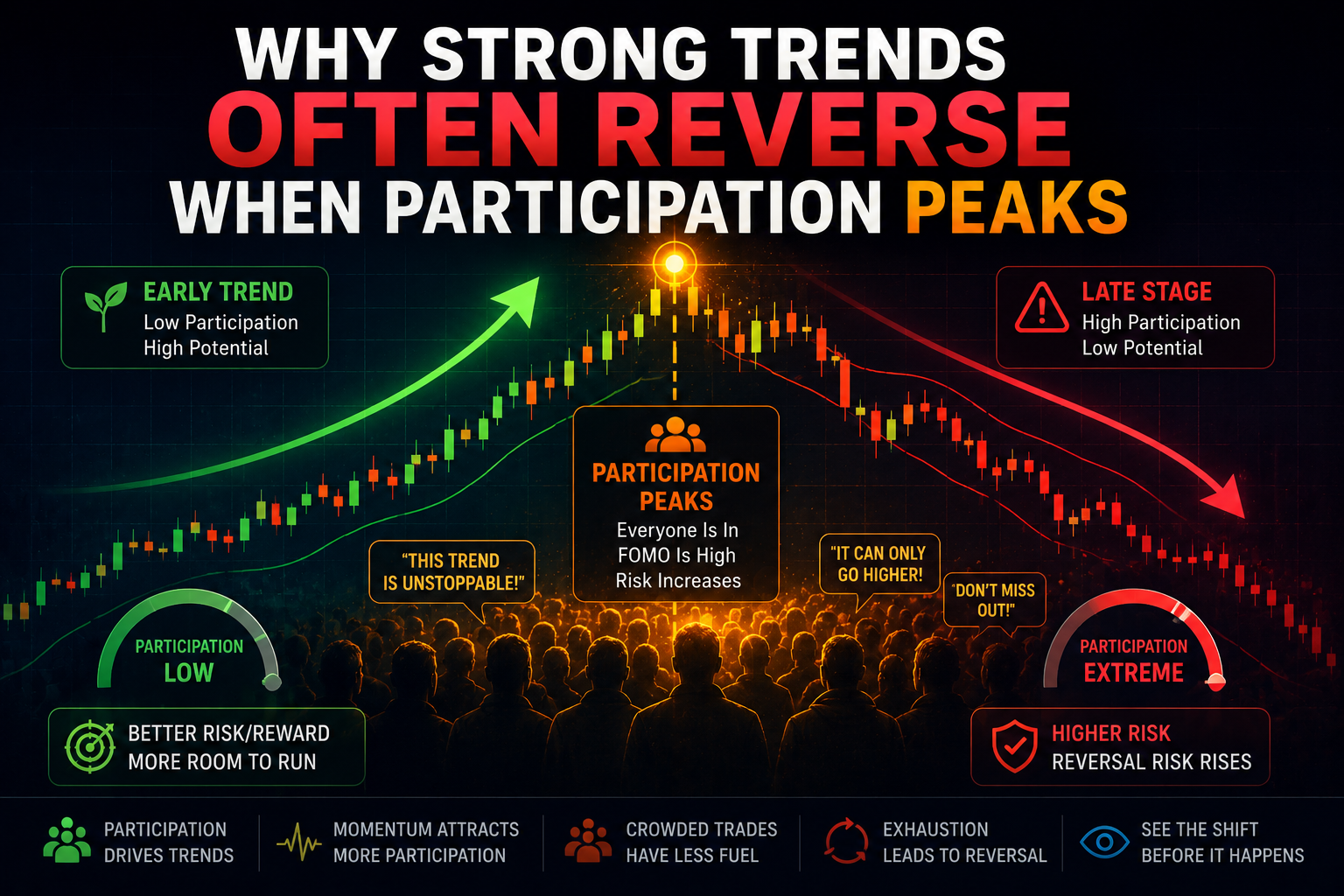
Why Strong Trends Often Reverse When Participation Peaks
Strong trends often appear safest near their peak, yet this is frequently where reversal risk begins increasing. This article explains how participation saturation develops and why late-stage momentum can weaken market structure.