
What Risk Confirmed Actually Means
Risk confirmation is often misunderstood as an additional signal rather than a decision framework. This article explains what risk confirmed truly means, how professionals think about confirmation, and why confirmed risk matters more than confirmed entries.
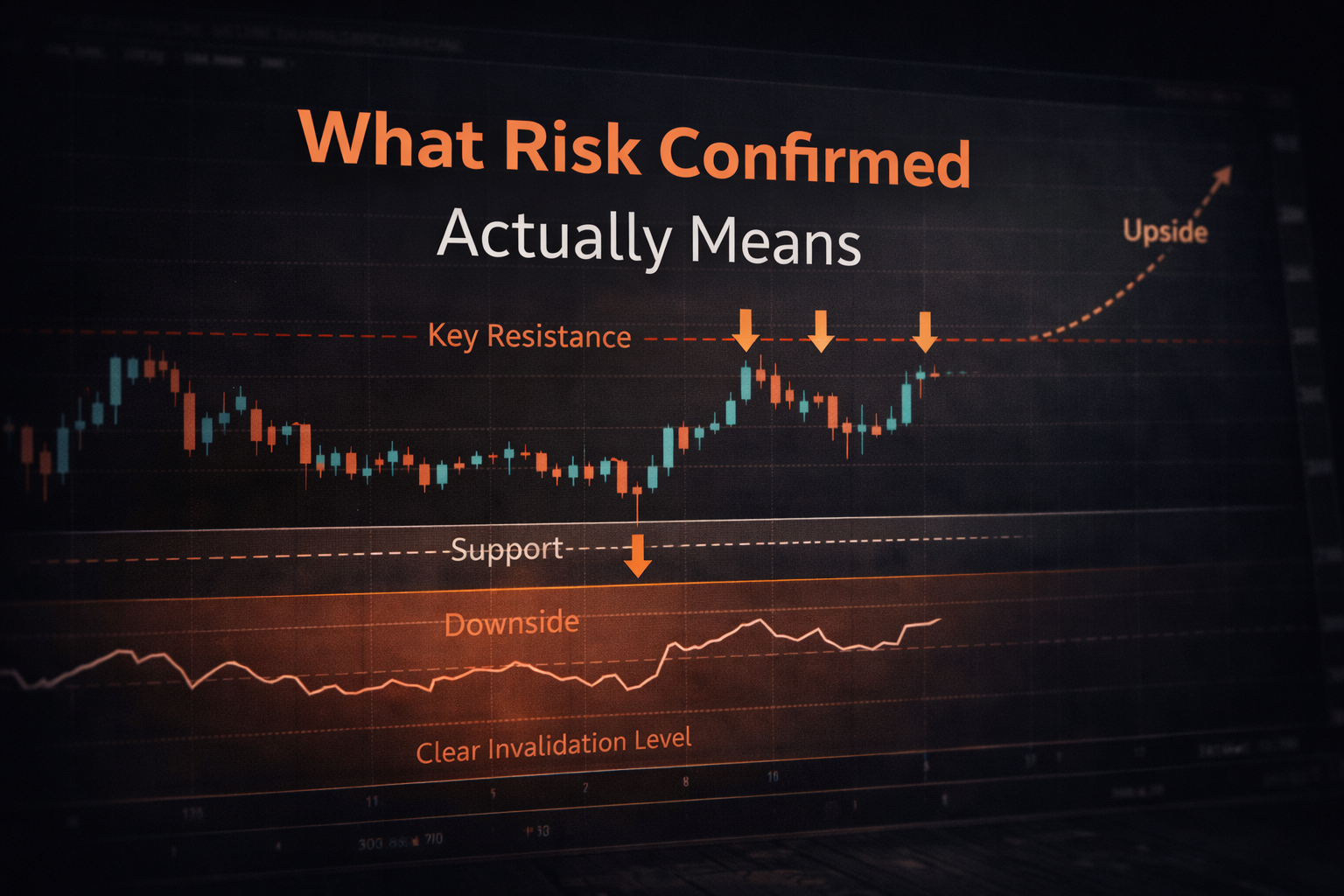
The phrase risk confirmed is often interpreted as another way of saying that a signal looks good. In professional trading, however, confirmation has very little to do with agreement and everything to do with exposure. Risk confirmation is not about increasing confidence in an entry, but about reducing uncertainty around downside.
Many traders associate confirmation with validation through multiple indicators or signals pointing in the same direction. While agreement can feel reassuring, it does not necessarily reduce risk. In fact, stacking signals without understanding their relationship to structure and context often increases exposure rather than controlling it.
Risk confirmed means that the conditions surrounding a trade idea have been examined and found to be structurally acceptable. It implies that market behavior supports the premise behind the trade and that the potential downside is understood, defined, and proportionate to the opportunity being considered.
A useful mental distinction is to separate confirmation of direction from confirmation of risk. Directional confirmation answers whether price might move higher or lower. Risk confirmation answers whether the trade remains valid if price behaves differently than expected. Professionals prioritize the latter.
When risk is not confirmed, traders often enter positions with flexible reasoning. As price moves against them, assumptions shift, invalidation levels are adjusted, and discipline erodes. Losses in these situations are not only financial, but psychological, as confidence in decision-making deteriorates.
Risk confirmation creates boundaries. It establishes where the trade idea fails and ensures that failure is acceptable before capital is committed. This does not prevent losses, but it prevents uncontrolled losses and reactive behavior when conditions change.
In practical terms, risk confirmation involves evaluating market structure, volatility conditions, liquidity behavior, and alignment across timeframes. It requires asking whether these elements support the trade premise or introduce asymmetric downside that cannot be justified by potential reward.
Professional traders often decline trades not because the upside is unattractive, but because the risk is unclear. This selectivity is a defining feature of consistency. Trades that pass risk confirmation are not guaranteed to work, but they fail cleanly when they do.
Risk confirmation also shifts focus away from precision. Perfect entries are less important than acceptable outcomes. A trade entered slightly late with defined risk is often superior to an early entry taken without clarity.
ChartDetector.ai is built around this professional understanding of confirmation. Rather than emphasizing signal agreement, the platform evaluates whether risk conditions align with the trade idea. This helps traders avoid situations where confirmation exists on the surface but exposure remains poorly defined.
Risk confirmed does not mean safe. It means understood. Before entering the next trade, the critical question is not whether the market agrees with the idea, but whether the risk associated with being wrong has been properly acknowledged and accepted.
Related Articles

Why Markets Punish Consensus
When everyone agrees on where the market is going, the opportunity is often already diminishing. This article explains why consensus creates comfort but rarely creates edge, and why professional traders pay close attention to crowd positioning.
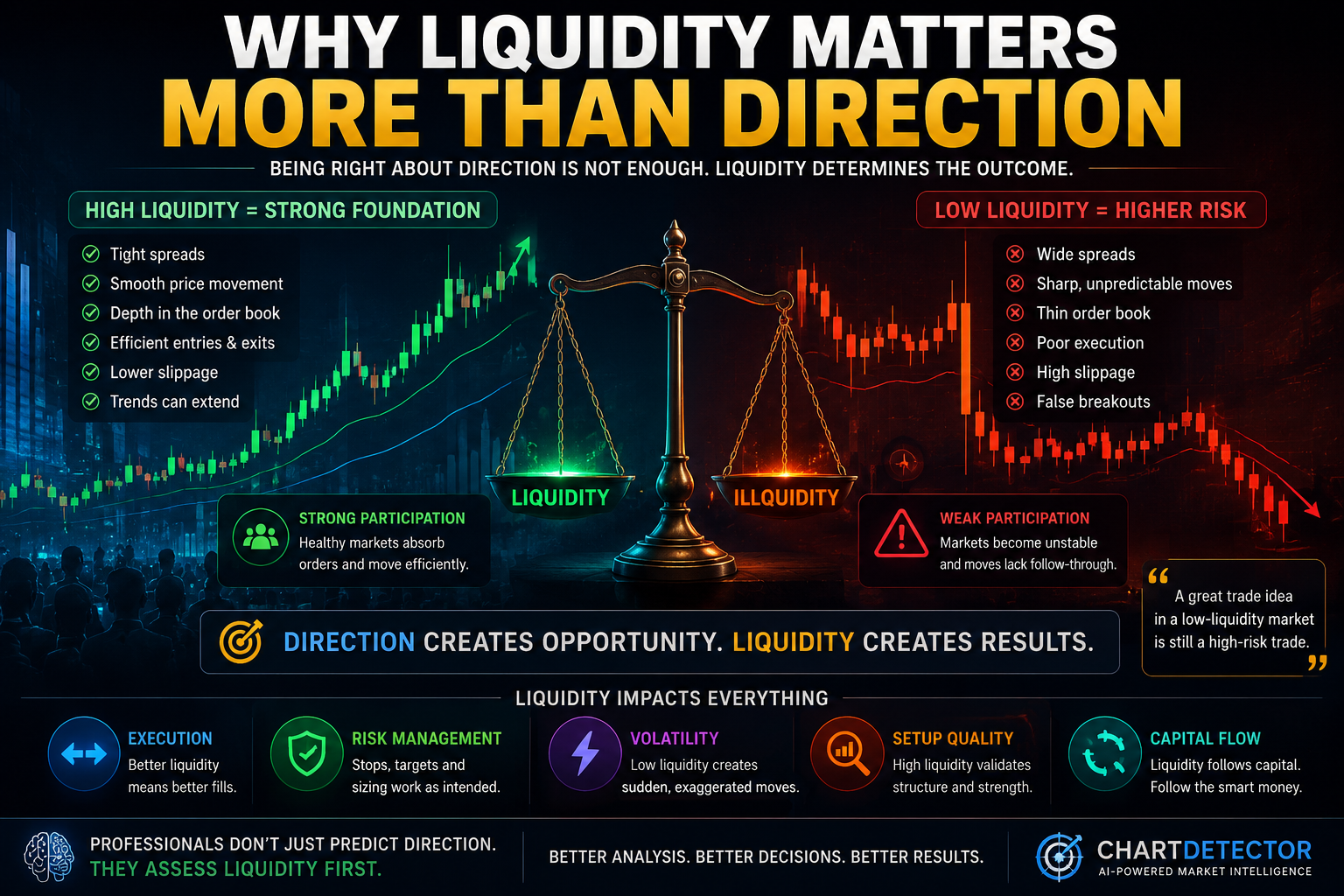
Why Liquidity Matters More Than Direction
Most traders focus on whether a market will move higher or lower. Professional traders focus on liquidity. This article explains why liquidity drives price movement, how it influences risk, and why being right about direction is often not enough.
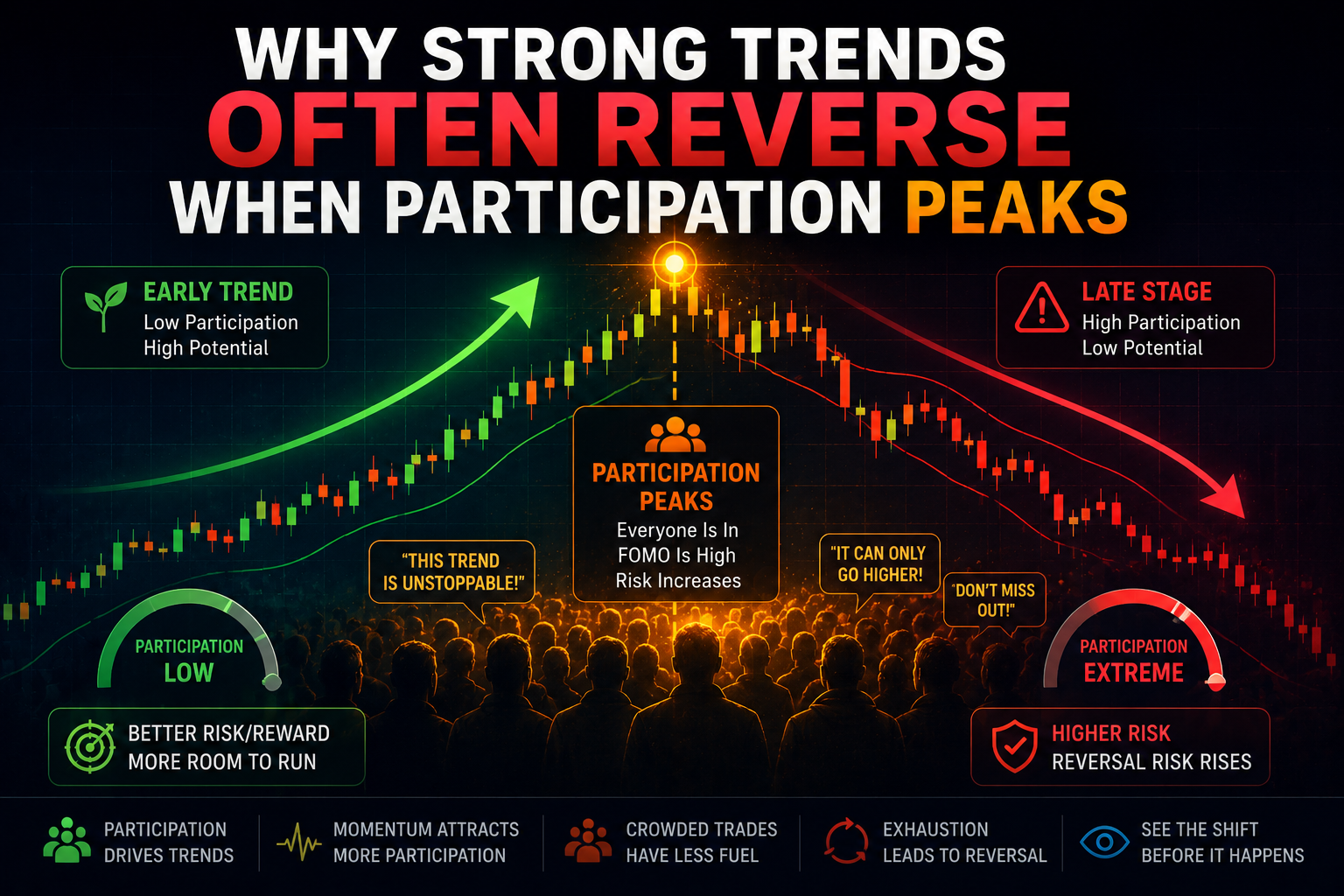
Why Strong Trends Often Reverse When Participation Peaks
Strong trends often appear safest near their peak, yet this is frequently where reversal risk begins increasing. This article explains how participation saturation develops and why late-stage momentum can weaken market structure.