
Why Consistency Comes From Behavior Not Strategy
Many traders search for consistency by changing strategies, yet consistency is rarely a function of tactics. This article explains why consistent results come from consistent behavior and how professionals build processes that perform across changing conditions.
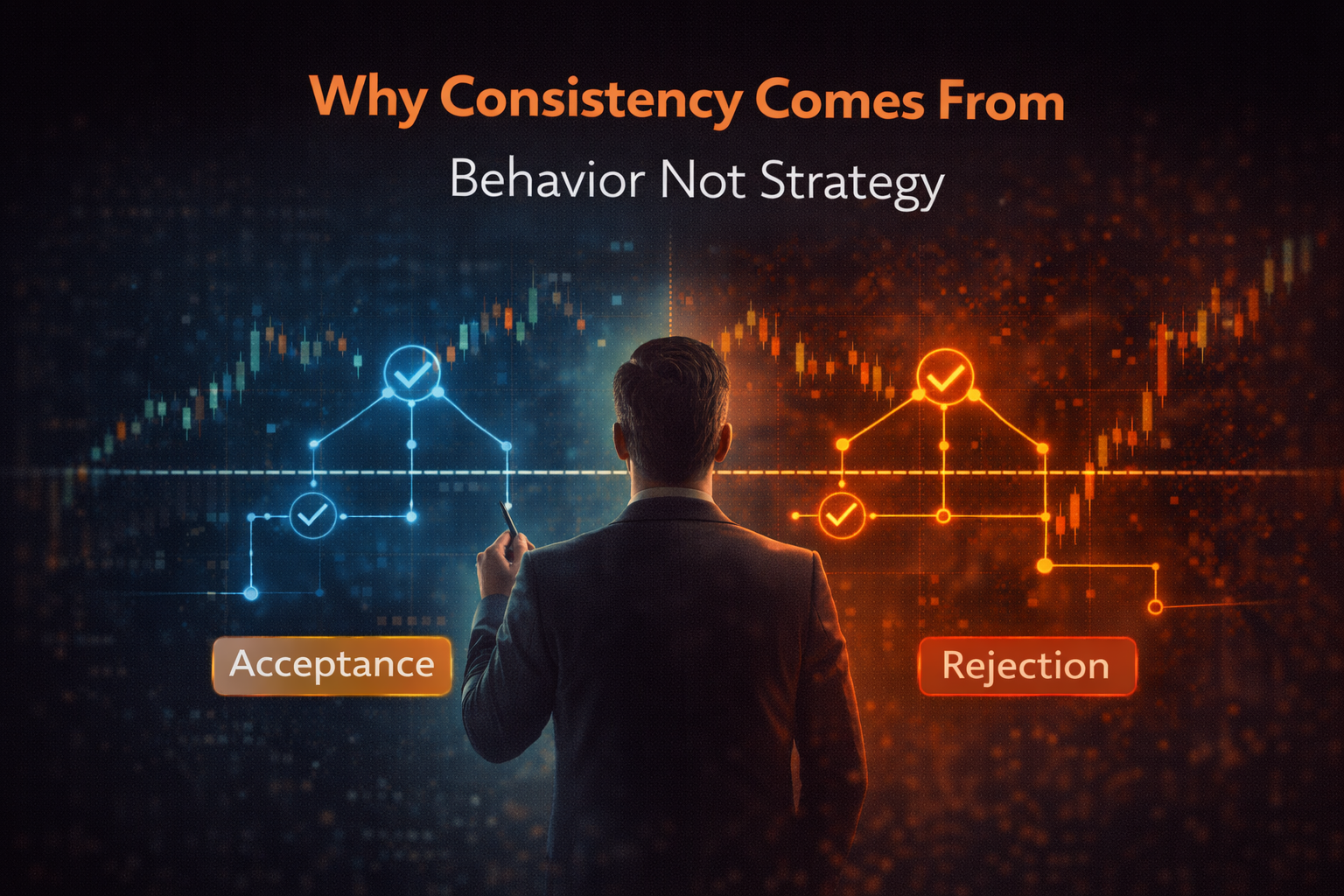
Many traders believe inconsistency is caused by using the wrong strategy. When results fluctuate, the instinctive response is to adjust rules, change indicators, or adopt a new approach altogether. Professional traders learn through experience that inconsistency rarely originates from strategy itself.
Markets change continuously. Volatility expands and contracts, trends emerge and fade, and liquidity conditions shift. No strategy performs optimally in all environments. Expecting tactical precision to solve inconsistency places responsibility on the wrong variable.
Consistency is primarily behavioral. It reflects how decisions are made, how risk is managed, and how rules are followed under pressure. A sound strategy executed inconsistently will underperform a modest strategy executed with discipline.
Behavior reveals itself most clearly during adversity. When trades fail or conditions become uncertain, undisciplined behavior appears as hesitation, overreaction, or rule bending. These responses create variability in outcomes that has little to do with analysis.
Professional traders design processes that stabilize behavior regardless of outcome. They define risk in advance, standardize decision criteria, and maintain consistent position sizing. These elements create a framework that limits emotional influence and reduces variability.
A useful mental distinction is to separate what changes from what should remain constant. Market conditions and outcomes will change. Decision behavior should not. Consistency emerges when behavior is repeatable even as results fluctuate.
When traders focus exclusively on strategy optimization, they often overlook behavioral drift. Rules are followed when conditions feel comfortable and abandoned when pressure increases. Over time, this selective adherence produces erratic performance that appears mysterious but is entirely predictable.
Process-oriented traders review decisions rather than outcomes. They assess whether trades followed predefined criteria and whether behavior aligned with intention. This approach produces actionable learning instead of reactive adjustment.
ChartDetector supports this behavioral foundation by emphasizing validation, context, and risk awareness rather than tactical optimization. By reinforcing consistent evaluation standards, the platform helps traders maintain stable behavior across varying conditions.
Consistency is not achieved by finding a strategy that never fails. It is achieved by building behaviors that respond predictably to uncertainty. When behavior stabilizes, performance follows.
Before searching for a new strategy, the more productive question is whether recent results reflect a change in markets or a change in behavior. The answer often determines the path back to consistency.
Related Articles
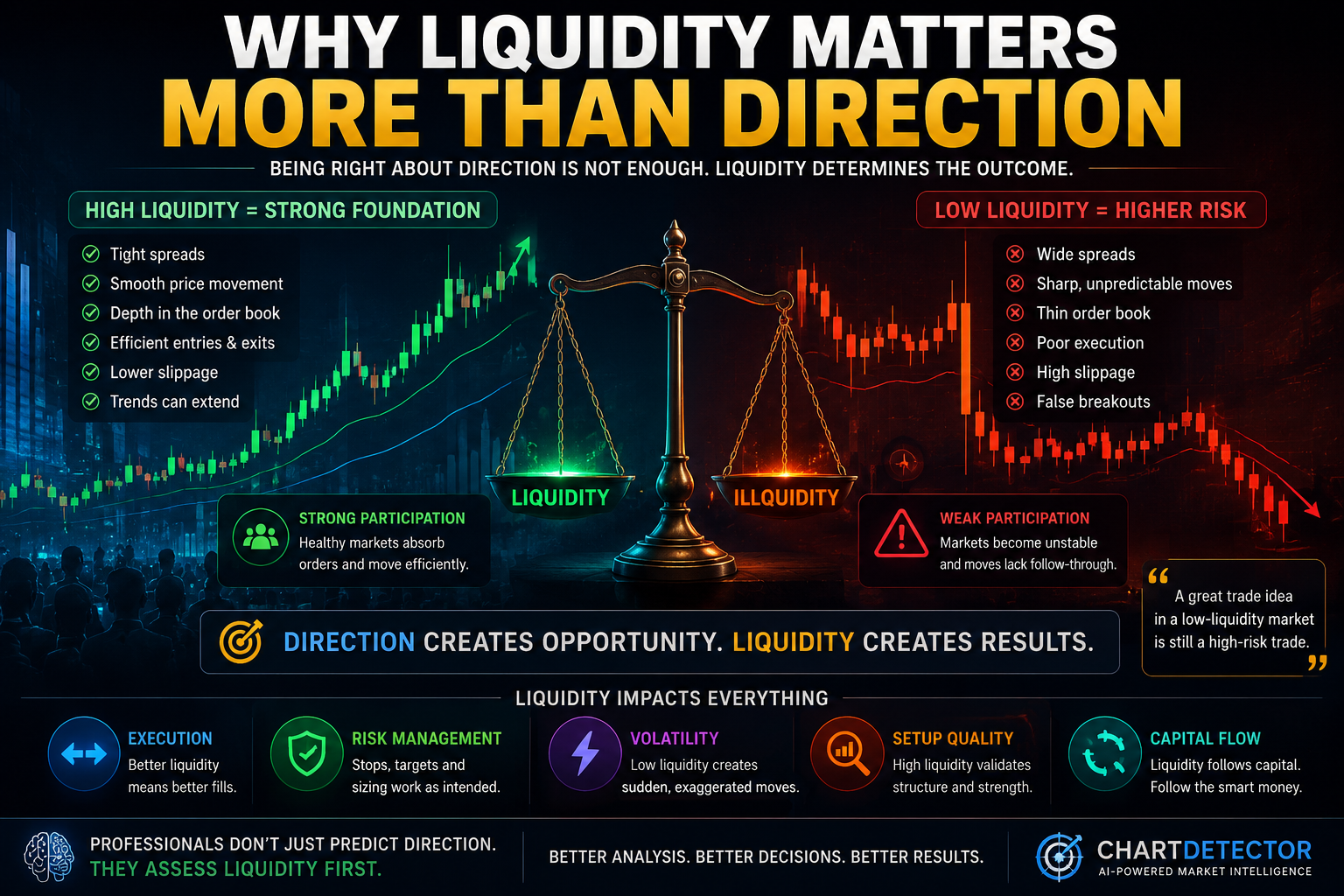
Why Liquidity Matters More Than Direction
Most traders focus on whether a market will move higher or lower. Professional traders focus on liquidity. This article explains why liquidity drives price movement, how it influences risk, and why being right about direction is often not enough.
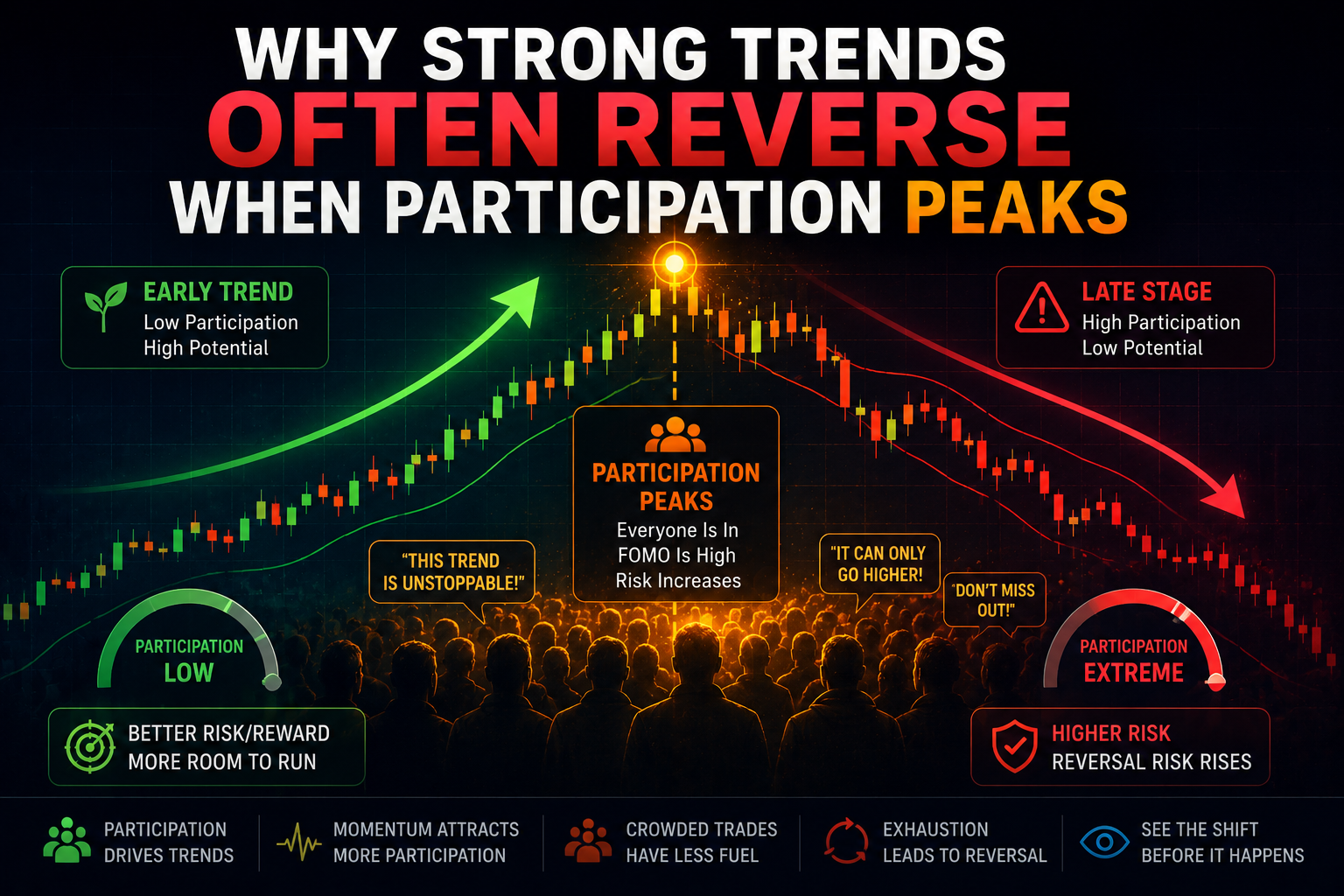
Why Strong Trends Often Reverse When Participation Peaks
Strong trends often appear safest near their peak, yet this is frequently where reversal risk begins increasing. This article explains how participation saturation develops and why late-stage momentum can weaken market structure.
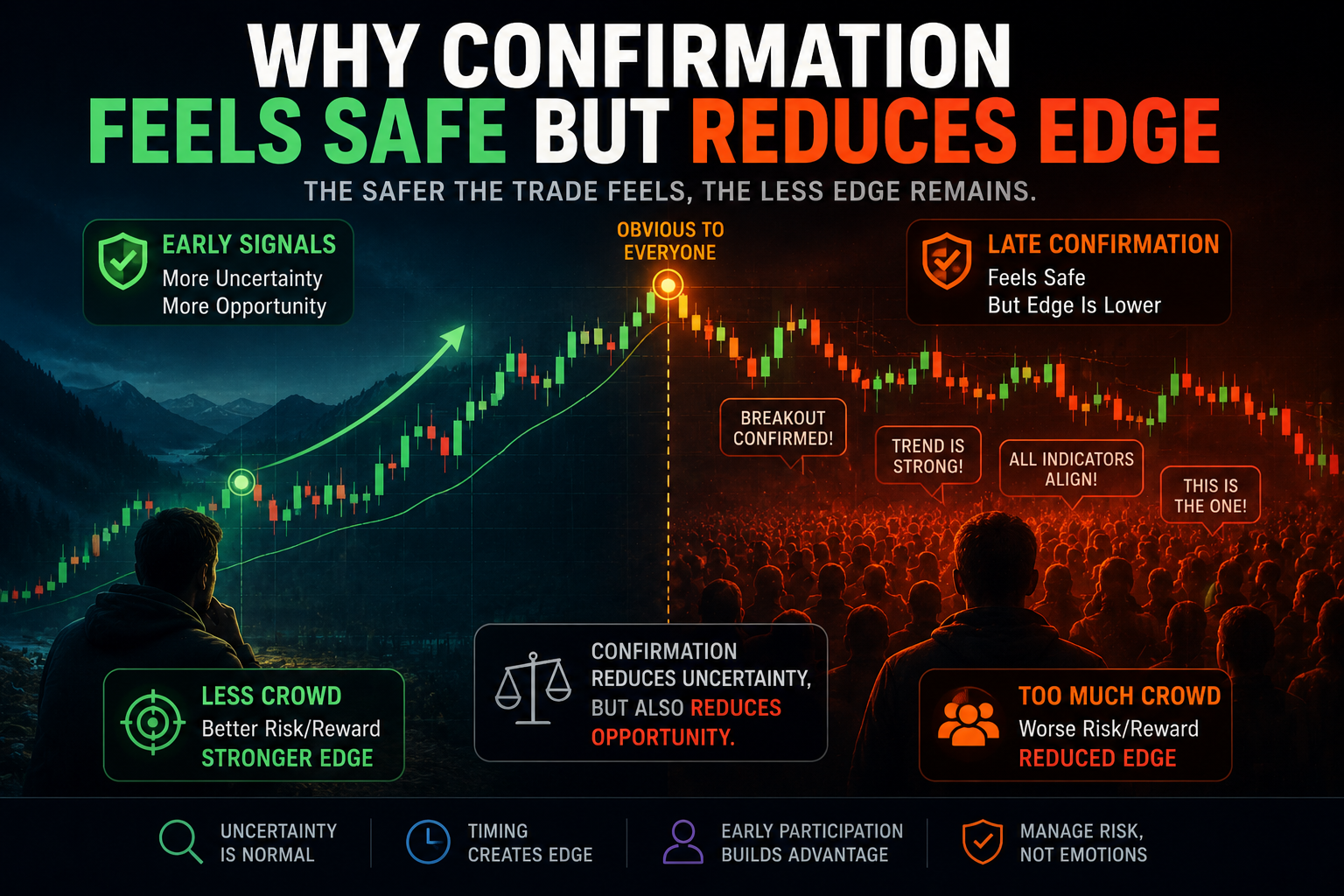
Why Confirmation Feels Safe But Reduces Edge
Confirmation reduces uncertainty, but it often reduces opportunity as well. This article explains why traders naturally seek confirmation, how it leads to crowded positioning, and why professional traders balance validation with timing.