Why Market Conditions Matter More Than Strategy
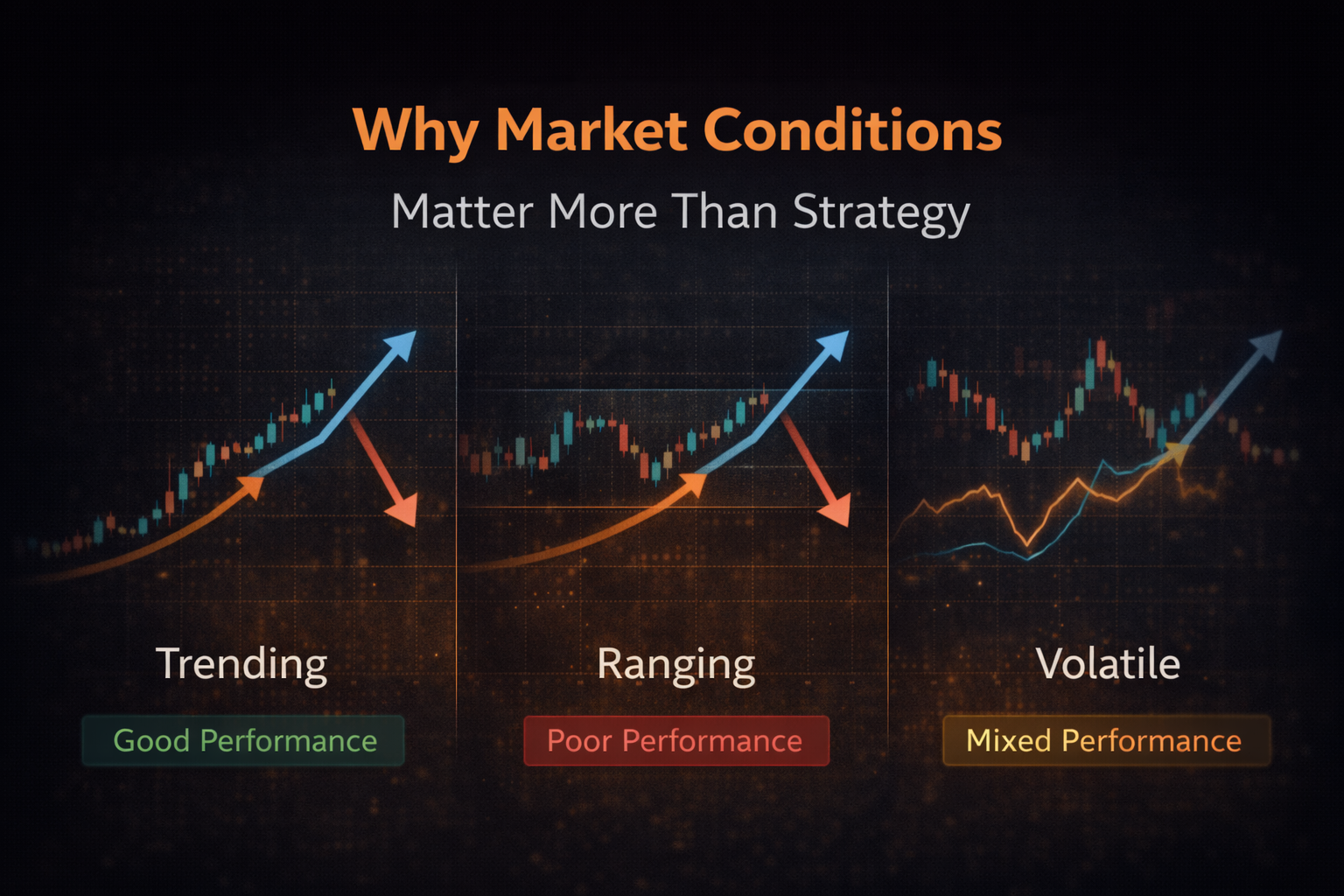
No strategy performs well in all environments. This article explains why market conditions determine outcomes more than strategy choice and how professionals adapt their expectations to different regimes.
Many traders search endlessly for the right strategy, believing that performance issues stem from flawed rules or poor indicators. Professional traders understand that strategies do not fail in isolation. They succeed or fail based on the conditions in which they are applied.
Markets move through different regimes. Trending environments, ranging conditions, high volatility phases, and low liquidity periods each reward different behaviors. A strategy designed for one regime often performs poorly in another, even if executed perfectly.
When traders ignore this reality, frustration follows. A strategy works well for a period, then suddenly stops performing. Rather than recognizing a shift in conditions, traders assume the edge has disappeared and begin modifying or abandoning the approach.
This cycle creates instability. Rules change, confidence erodes, and performance becomes inconsistent. The issue is not adaptability, but misattribution. Strategy is blamed for what is actually a contextual shift.
Professional traders evaluate market conditions before evaluating tactics. They ask whether the environment supports trend continuation, mean reversion, or risk compression. Strategy selection follows context, not the other way around.
A useful mental model is to think of strategy as a tool rather than a solution. A tool performs well when used appropriately and poorly when misapplied. No single tool is suitable for every task.
Understanding market conditions also improves patience. When conditions are unfavorable, professionals reduce exposure or step aside entirely rather than forcing execution. This protects capital and preserves confidence.
ChartDetector.ai is designed to surface contextual information before emphasizing opportunity. By evaluating structure, volatility, and risk conditions, the platform helps traders recognize when strategies are misaligned with the current environment.
Successful trading is less about finding the perfect strategy and more about applying reasonable strategies in appropriate conditions. When context leads and strategy follows, decision-making becomes clearer and performance becomes more stable.
Before changing your approach, consider whether the market has changed instead. Often, the difference between inconsistency and progress lies not in what you trade, but in when you choose to trade it.
Related Articles
Why Liquidity Matters More Than Direction
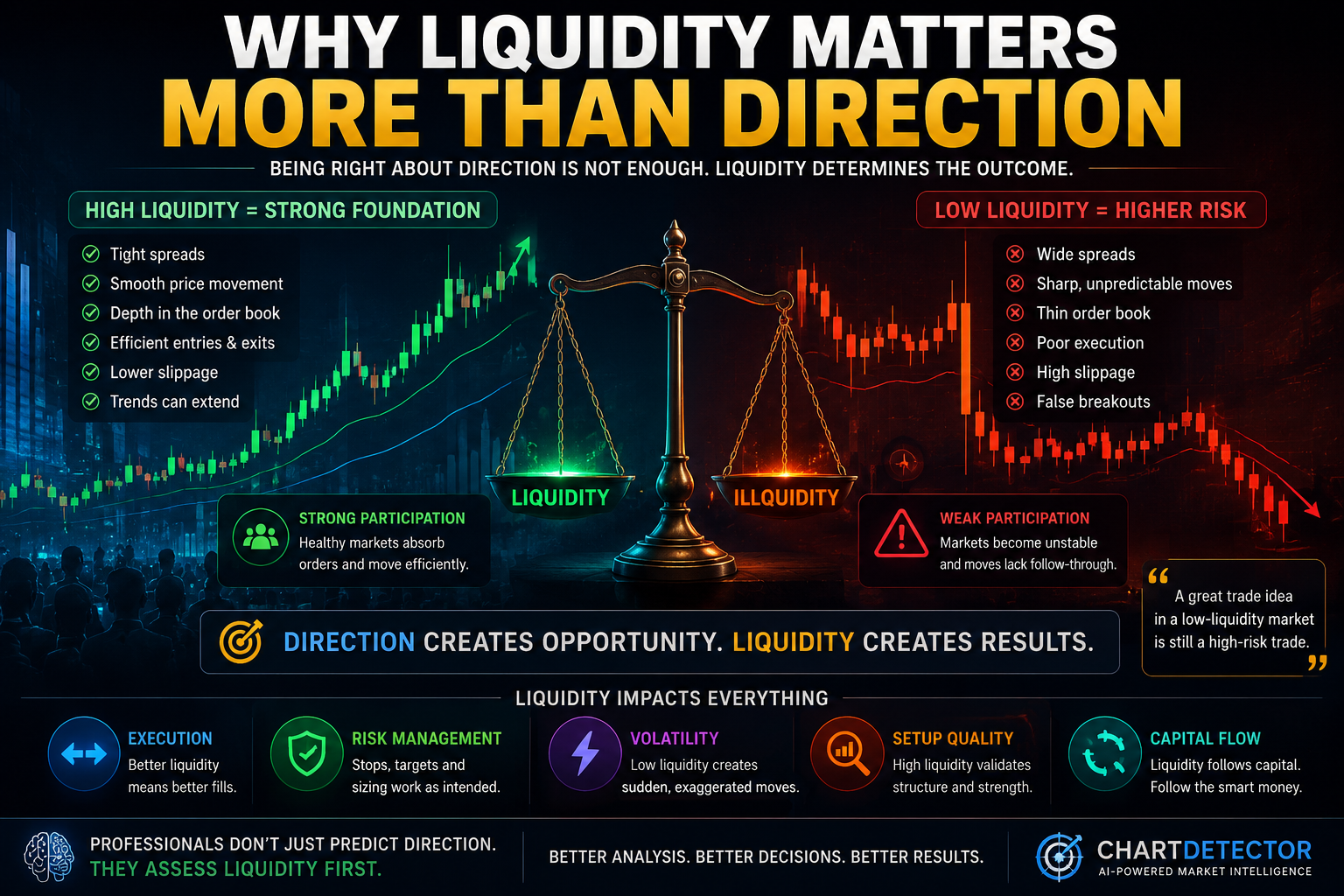
Most traders focus on whether a market will move higher or lower. Professional traders focus on liquidity. This article explains why liquidity drives price movement, how it influences risk, and why being right about direction is often not enough.
Why Strong Trends Often Reverse When Participation Peaks
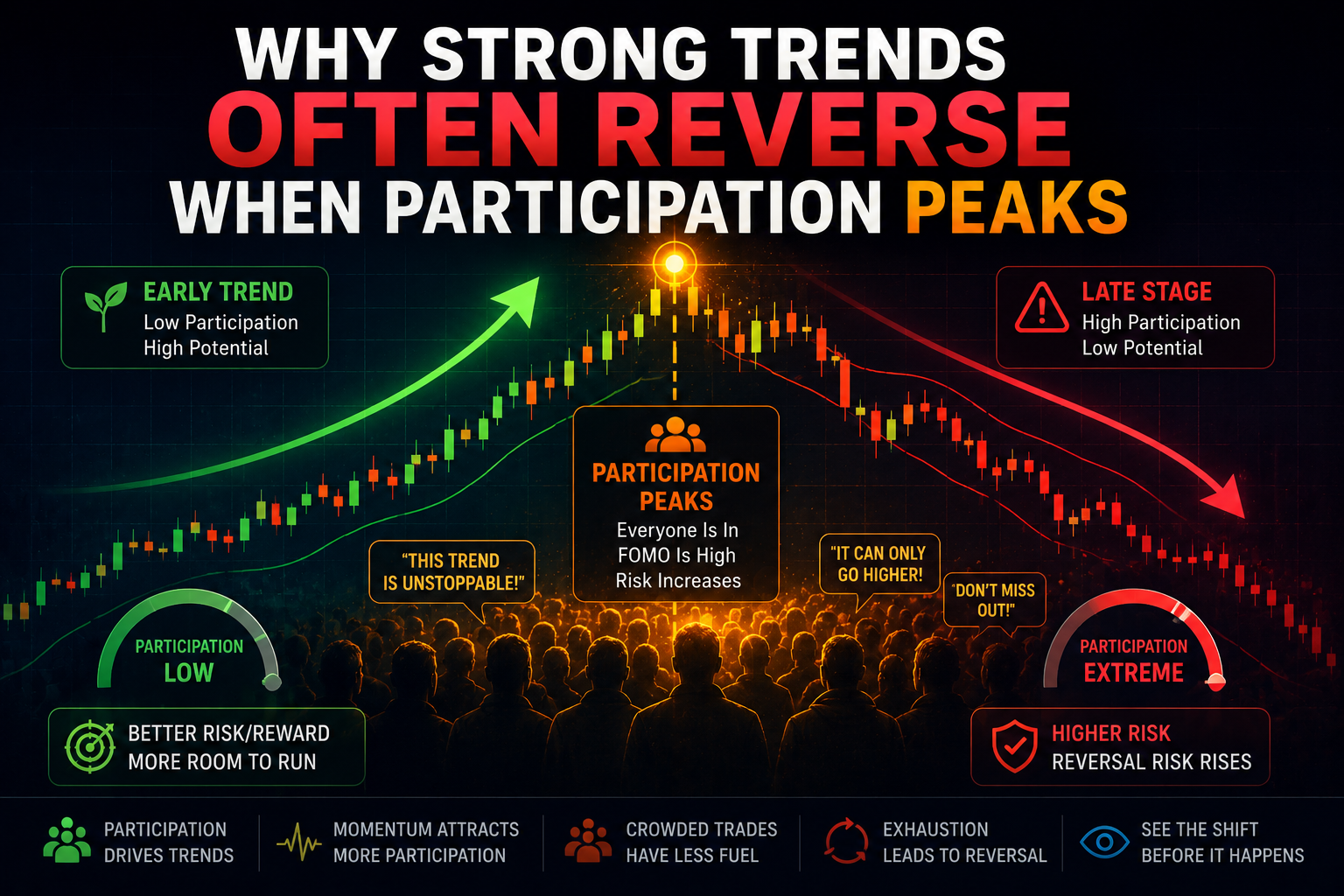
Strong trends often appear safest near their peak, yet this is frequently where reversal risk begins increasing. This article explains how participation saturation develops and why late-stage momentum can weaken market structure.
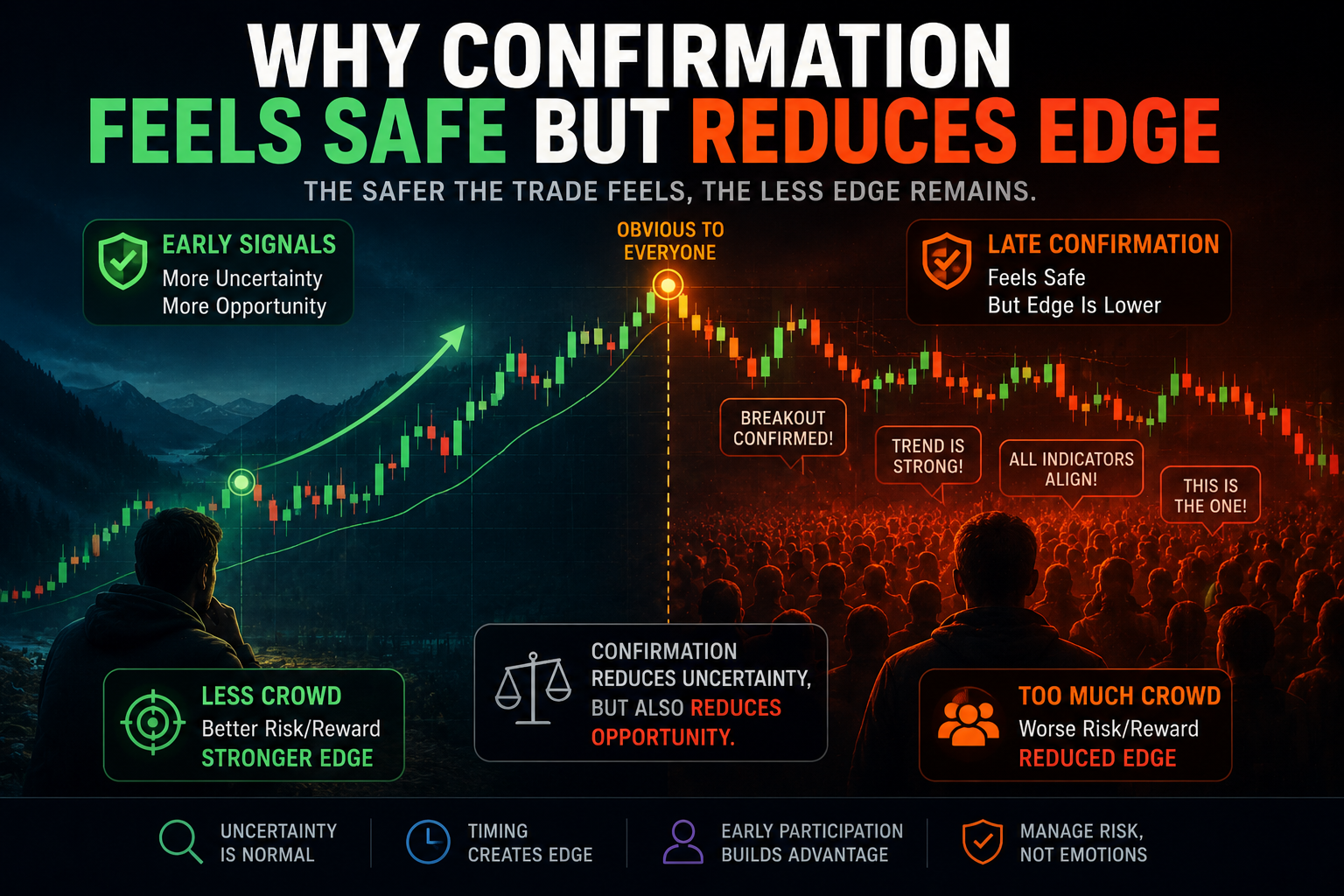
Why Confirmation Feels Safe But Reduces Edge
Confirmation reduces uncertainty, but it often reduces opportunity as well. This article explains why traders naturally seek confirmation, how it leads to crowded positioning, and why professional traders balance validation with timing.