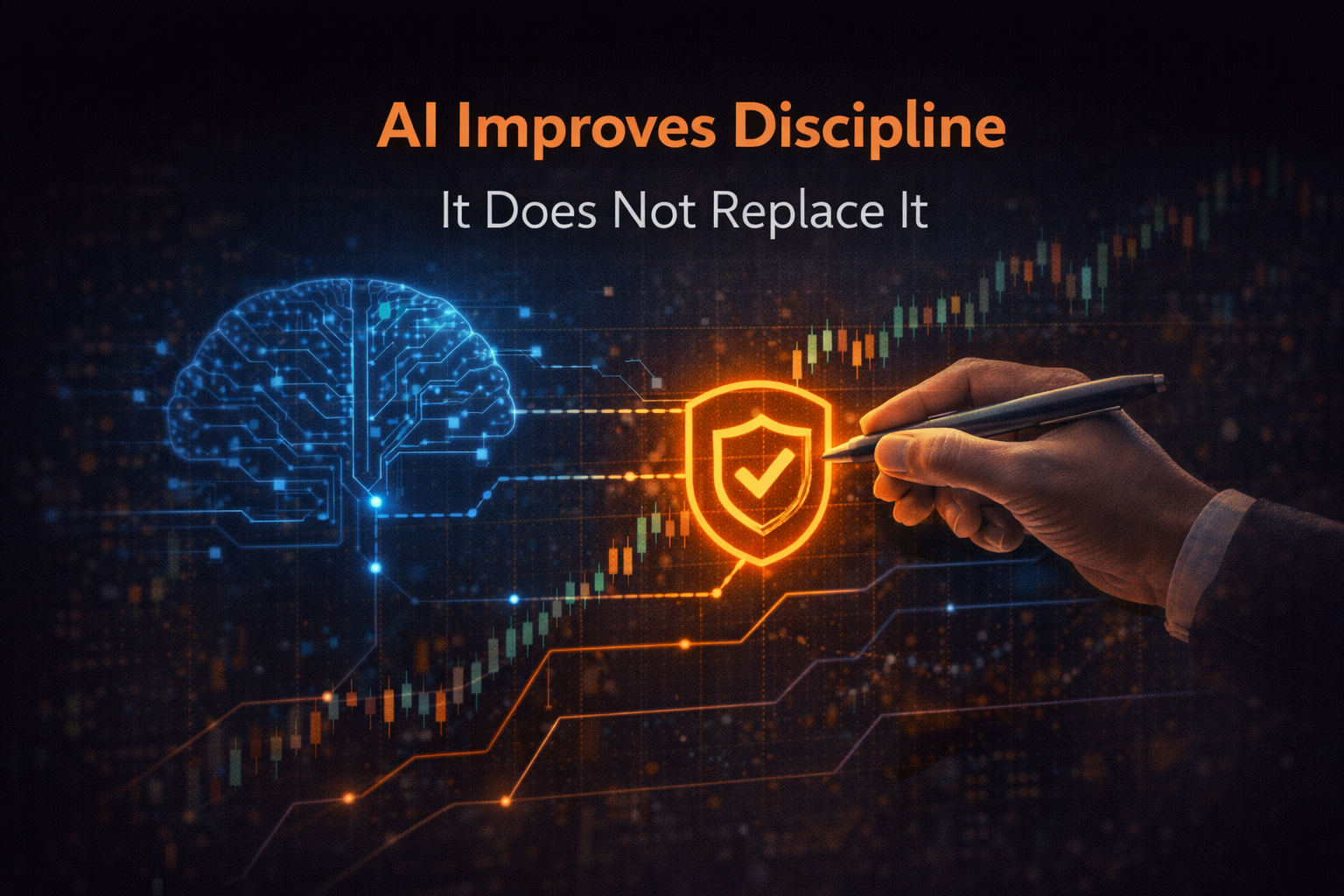
AI Improves Discipline It Does Not Replace It
AI can support consistency and objectivity, but it cannot supply discipline on its own. This article explains how professional traders use AI to reinforce disciplined behavior and why expecting AI to replace discipline leads to weaker decision-making.
Discipline is one of the most frequently cited traits of successful traders, yet it is also one of the most misunderstood. Many traders assume that discipline can be outsourced to systems, rules, or automation, believing that removing discretion will automatically produce consistent behavior.
AI challenges this assumption by highlighting an important truth. Discipline is not created by tools. It is reinforced by them. Without an underlying decision framework, even the most advanced AI will amplify inconsistency rather than resolve it.
Professional traders do not use AI to enforce obedience to signals. They use it to surface information consistently and objectively so that disciplined decisions become easier to maintain. The responsibility to act or refrain still rests with the trader.
A lack of discipline rarely stems from insufficient information. It usually arises from emotional pressure, fatigue, or uncertainty. AI helps by providing stable reference points during these moments, allowing traders to evaluate conditions without distortion.
When traders expect AI to replace discipline, problems emerge quickly. Signals are followed mechanically, context is ignored, and responsibility is displaced. When outcomes disappoint, confidence erodes and the tool is blamed rather than the process.
Discipline is a behavior developed through repetition, reflection, and accountability. AI contributes by reducing noise, highlighting risk conditions, and flagging inconsistencies between assumptions and market behavior. It supports discipline by reinforcing structure, not by enforcing compliance.
Professional traders integrate AI into routines rather than decisions. AI informs pre-trade evaluation, risk assessment, and post-trade review, but it does not override judgment. This integration strengthens habits instead of substituting for them.
A useful mental model is to view AI as a stabilizer rather than a controller. It helps maintain balance when emotions rise or conditions become unclear, but it does not steer the process independently.
ChartDetector.ai reflects this philosophy by presenting AI insights as context and validation rather than commands. The platform is designed to support disciplined workflows while keeping decision authority with the trader.
Discipline cannot be automated because it is a choice made repeatedly under uncertainty. AI can make that choice easier to uphold by reducing friction and bias, but it cannot make it on the trader’s behalf.
The next time AI provides insight, the most important question is not whether to follow it, but whether it reinforces a disciplined decision framework that you already trust.
Related Articles

Why Markets Punish Consensus
When everyone agrees on where the market is going, the opportunity is often already diminishing. This article explains why consensus creates comfort but rarely creates edge, and why professional traders pay close attention to crowd positioning.
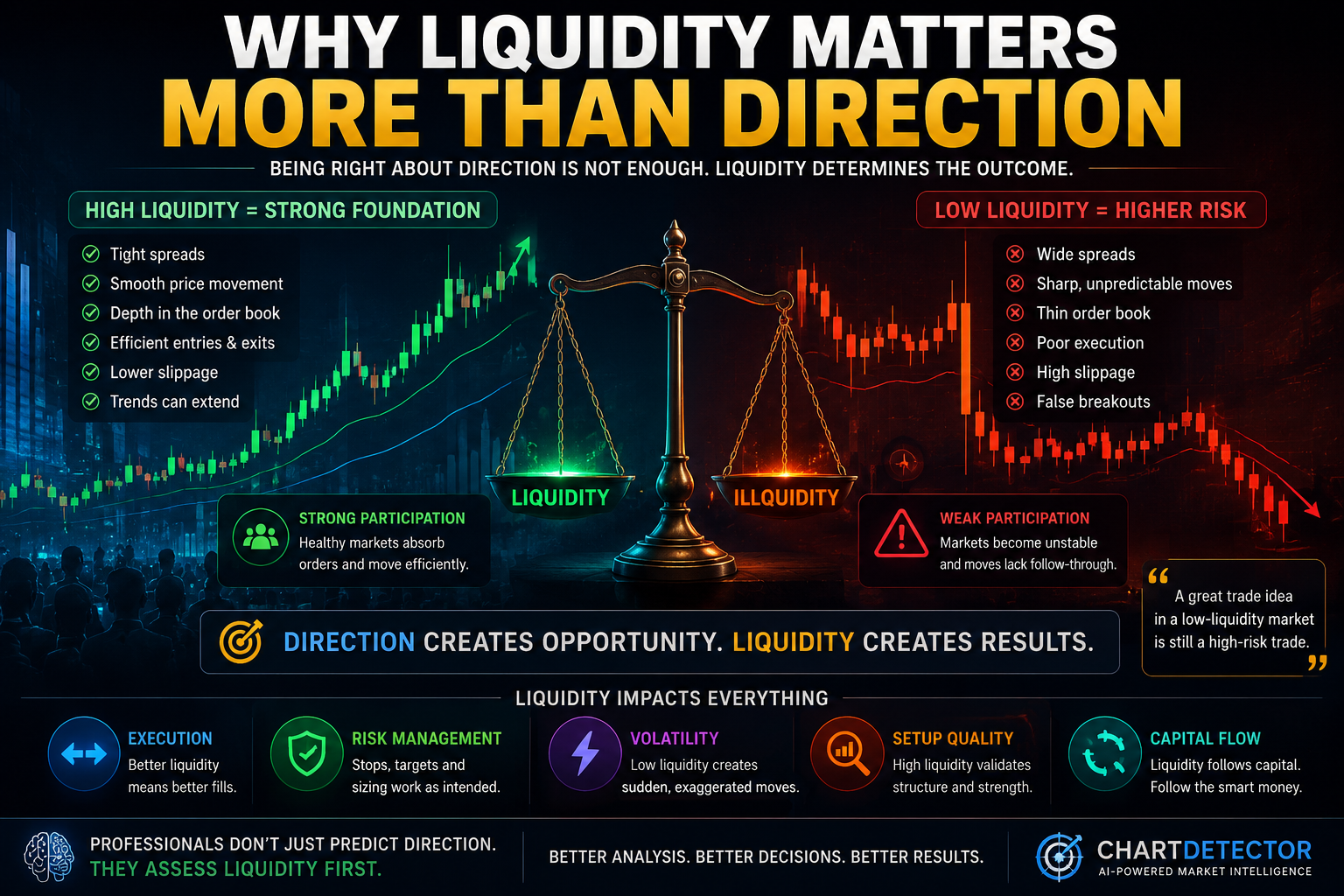
Why Liquidity Matters More Than Direction
Most traders focus on whether a market will move higher or lower. Professional traders focus on liquidity. This article explains why liquidity drives price movement, how it influences risk, and why being right about direction is often not enough.
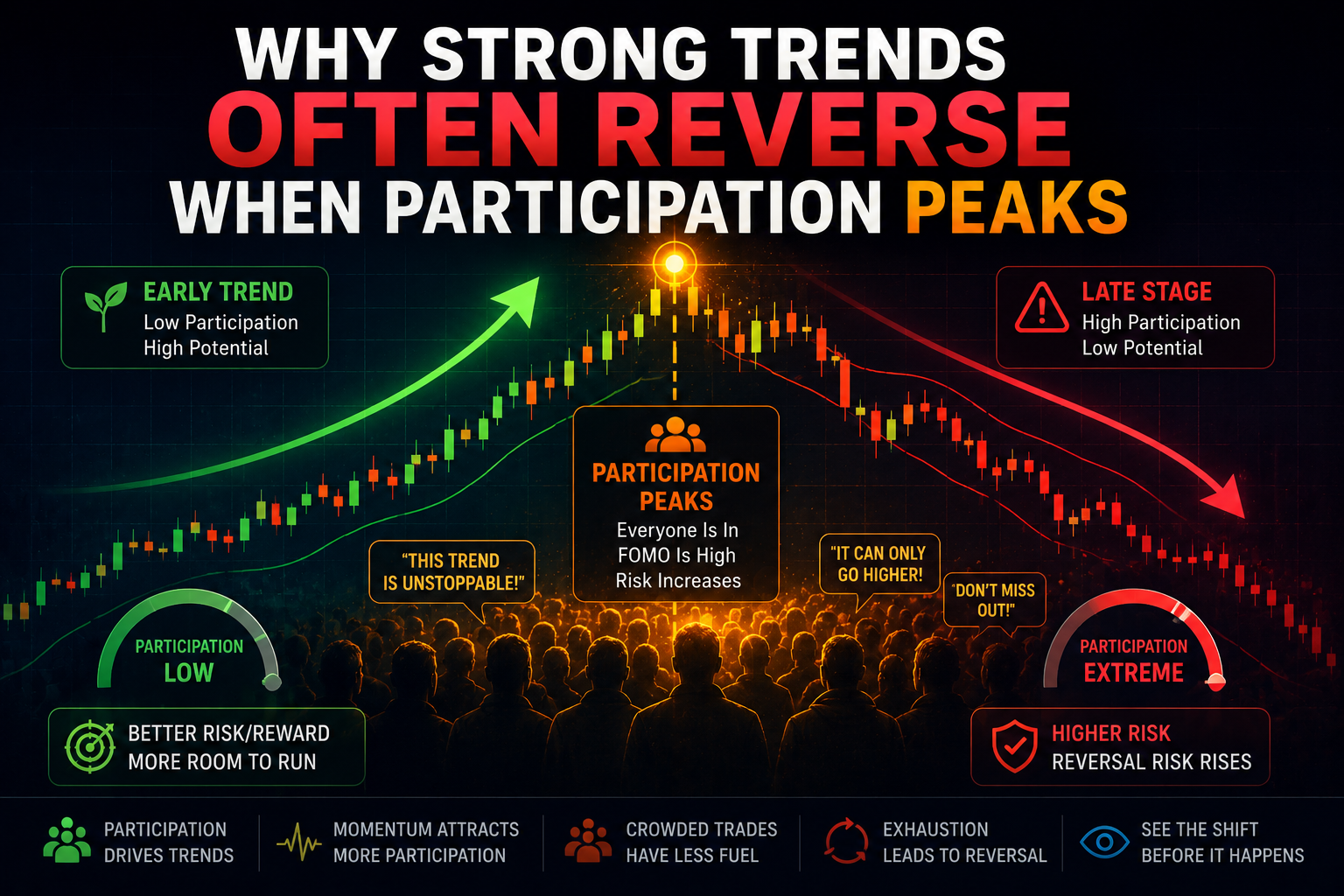
Why Strong Trends Often Reverse When Participation Peaks
Strong trends often appear safest near their peak, yet this is frequently where reversal risk begins increasing. This article explains how participation saturation develops and why late-stage momentum can weaken market structure.