AI Is a Second Opinion Not a Signal Generator
AI is often misunderstood as a tool that should generate trades automatically. Professional traders use AI differently. This article explains why AI works best as a second opinion, how it improves decision quality, and where relying on it too heavily creates risk.
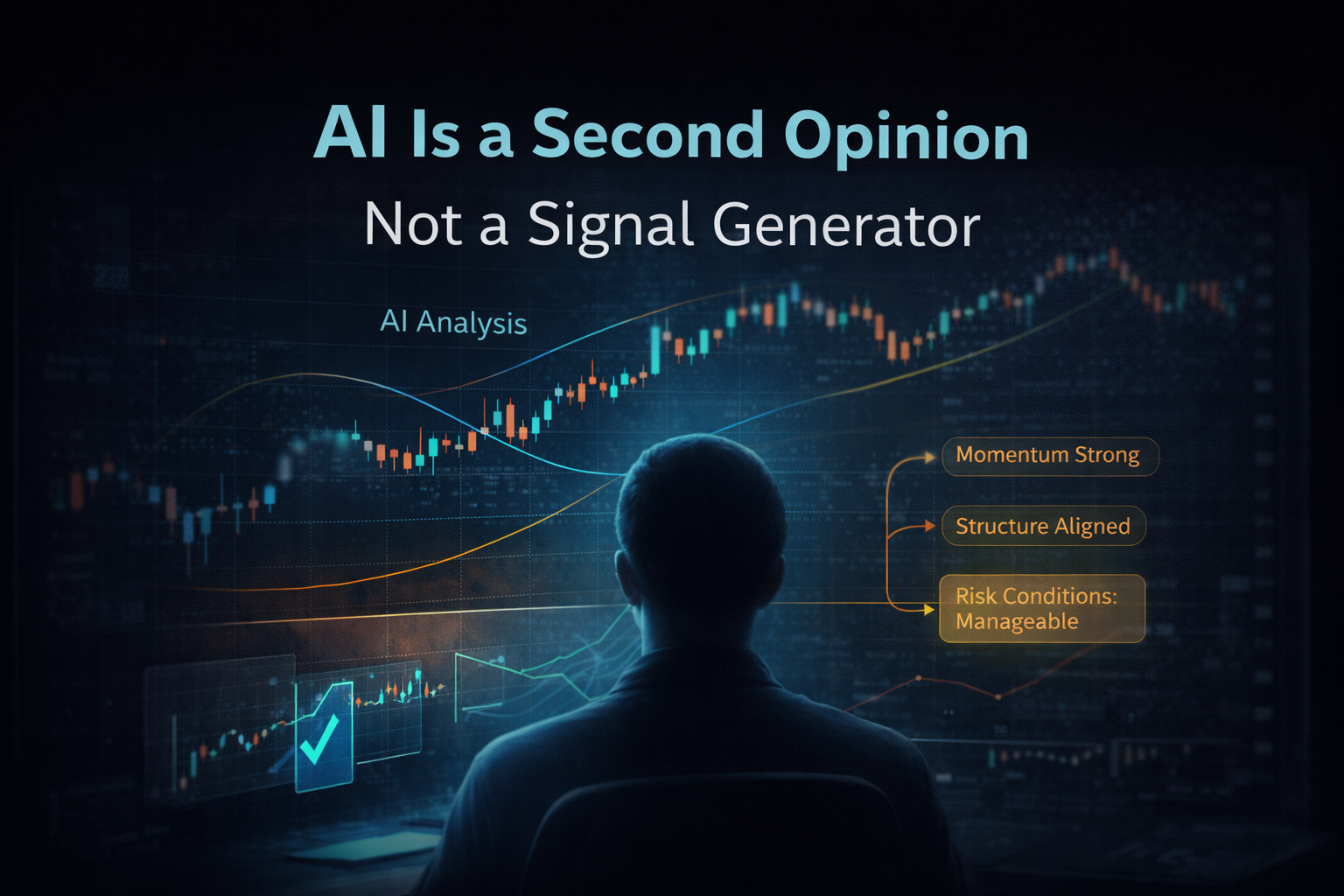
As artificial intelligence becomes more accessible in trading, many traders assume its primary value lies in generating signals. The expectation is simple: if AI can analyze more data than a human, it should be able to tell traders exactly when to buy or sell. This assumption misunderstands both how markets function and where AI provides its greatest advantage.
Markets are adaptive systems driven by human behavior, liquidity, and changing conditions. No model, regardless of complexity, can eliminate uncertainty or predict outcomes with consistency. Professional traders understand this and therefore do not delegate decision-making authority to any single tool, whether human or machine.
AI is most effective when it functions as a second opinion rather than a signal generator. Its value lies in processing large amounts of information objectively and consistently, free from emotion, fatigue, or cognitive bias. When used this way, AI enhances judgment instead of replacing it.
A signal generator encourages reaction. It creates a sense of obligation to act when a condition is met, even if broader context does not support the decision. This dynamic often leads to overtrading, reduced selectivity, and a false sense of certainty.
A second opinion operates differently. It challenges assumptions, highlights conditions that may be overlooked, and reinforces discipline by presenting information without emotional framing. The trader remains responsible for the decision, but the quality of that decision improves through additional perspective.
Professional traders already operate this way without AI. They consult multiple forms of analysis, cross-check assumptions, and look for reasons not to take a trade rather than reasons to justify it. AI fits naturally into this process as a consistent analytical partner.
When traders treat AI as a signal generator, problems emerge quickly. Losses feel externalized, discipline weakens, and learning slows because responsibility is shifted away from the decision-maker. When AI is wrong, trust is lost. When it is right, understanding does not improve.
Using AI as a second opinion keeps accountability intact. The trader remains engaged, reflective, and responsible for outcomes. AI contributes clarity, not authority.
ChartDetector.ai is designed around this professional mindset. AI analysis is presented to support validation, highlight risk conditions, and provide context, not to dictate action. This allows traders to integrate AI into their workflow without surrendering judgment.
The goal of AI in trading is not to remove decision-making, but to improve it. When AI is used as a second opinion, it strengthens discipline, reduces bias, and supports consistency over time.
Before acting on any AI-driven insight, the most important question remains the same as it has always been: does this information improve my understanding of risk and context, or am I looking for permission to act.
Related Articles

Why Markets Punish Consensus
When everyone agrees on where the market is going, the opportunity is often already diminishing. This article explains why consensus creates comfort but rarely creates edge, and why professional traders pay close attention to crowd positioning.
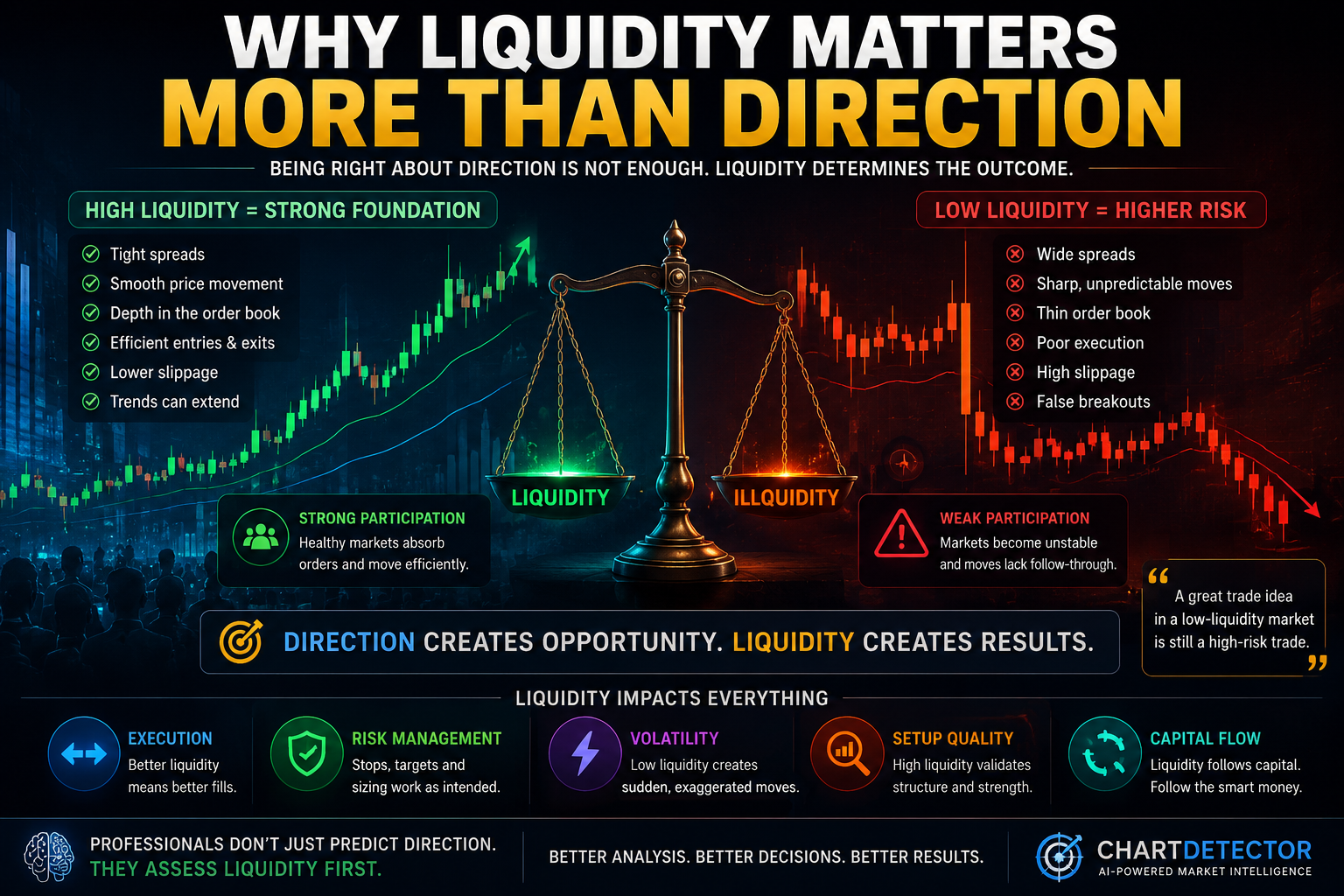
Why Liquidity Matters More Than Direction
Most traders focus on whether a market will move higher or lower. Professional traders focus on liquidity. This article explains why liquidity drives price movement, how it influences risk, and why being right about direction is often not enough.
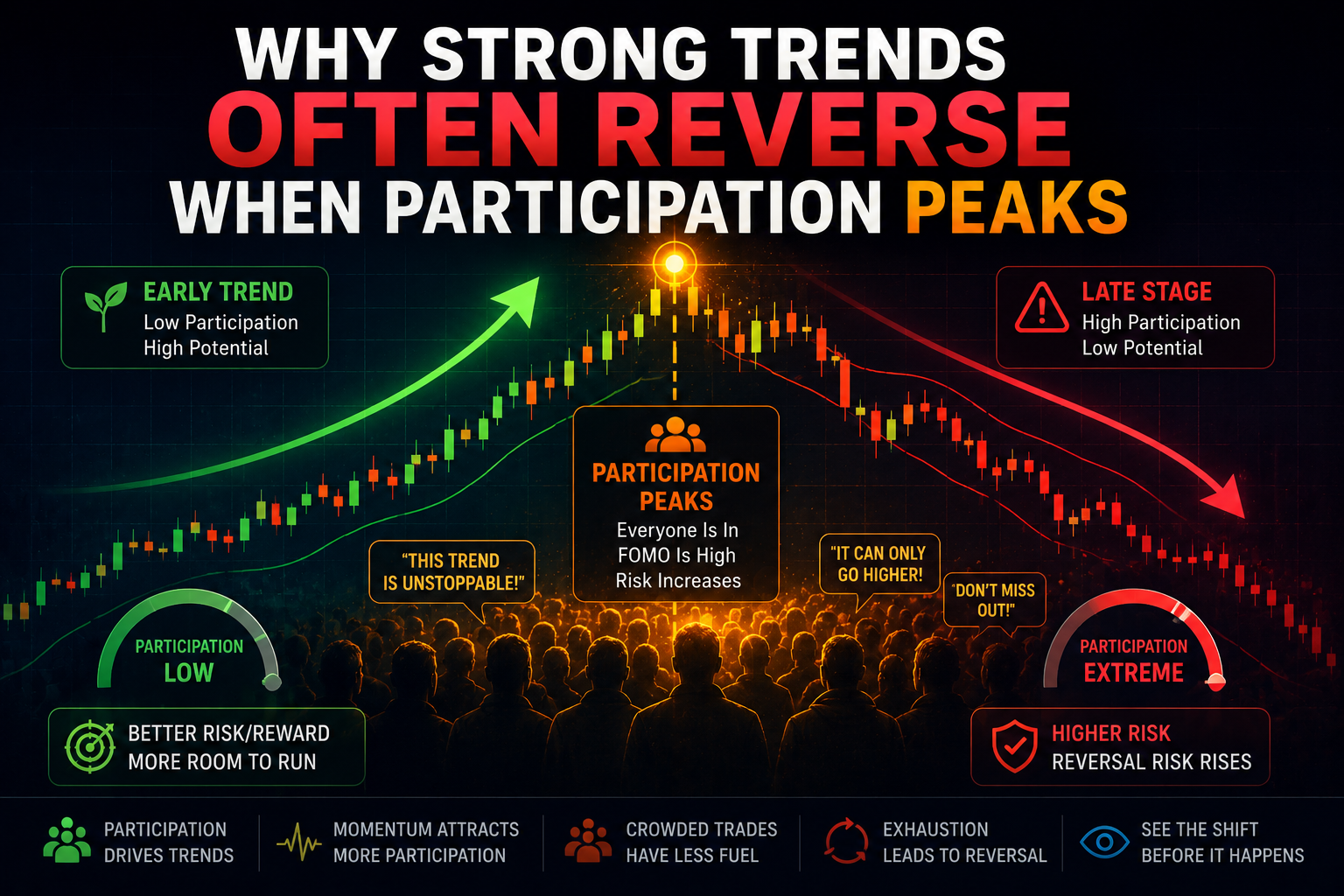
Why Strong Trends Often Reverse When Participation Peaks
Strong trends often appear safest near their peak, yet this is frequently where reversal risk begins increasing. This article explains how participation saturation develops and why late-stage momentum can weaken market structure.