AI Should Challenge Your Trades Not Agree With Them
Many traders expect AI tools to confirm their ideas, yet the real value of AI is in challenging assumptions. This article explains why confirmation from AI can reinforce bias and how professional traders use AI as an independent analytical check.
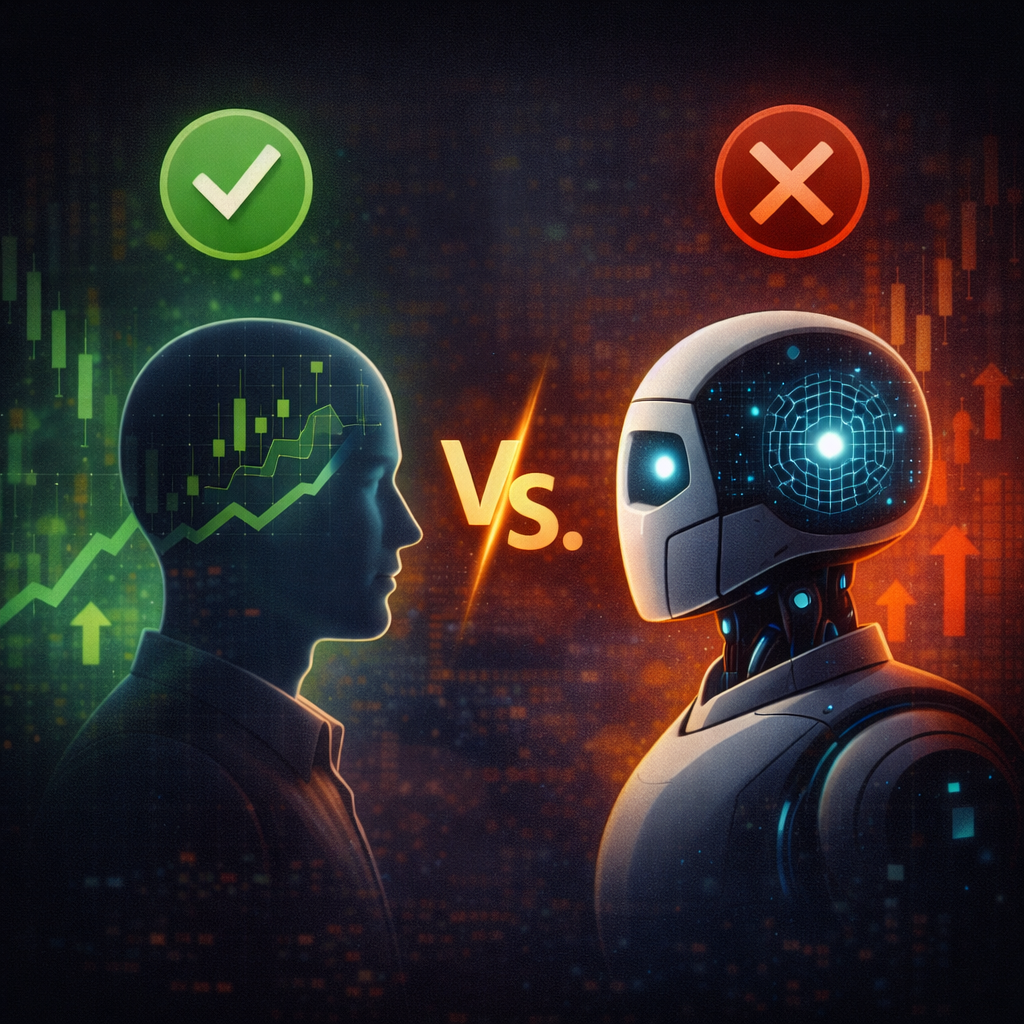
Artificial intelligence has become a common tool in modern trading platforms. Traders increasingly rely on AI to analyze charts, interpret indicators, and validate trade ideas. Many participants approach these tools with a specific expectation. They hope the system will confirm the conclusions they have already reached.
This expectation misunderstands the true value of AI in decision-making.
AI is most useful when it introduces independent analysis. If an AI system simply agrees with a trader’s existing opinion, it adds little informational value. Agreement can feel reassuring, but reassurance does not improve decision quality.
Human decision-making is naturally influenced by confirmation bias. Traders tend to search for evidence that supports their existing views while ignoring information that contradicts them. When AI tools are used only as confirmation engines, they can unintentionally reinforce this bias.
Professional traders approach AI differently. They treat it as an analytical counterpart rather than an approval mechanism. Instead of asking the system to validate a trade, they use it to examine assumptions, identify weaknesses, and highlight structural risks that may not be immediately visible.
This adversarial relationship improves analytical discipline. When AI challenges a trade idea by highlighting volatility conditions, structural fragility, or conflicting signals, the trader gains a clearer understanding of the trade’s true risk profile.
Independent analysis is particularly valuable because markets are complex adaptive systems. No single perspective captures the entire picture. Combining human judgment with algorithmic analysis introduces diversity in interpretation, which reduces the likelihood of blind spots.
A trader who uses AI to test an idea gains more insight than a trader who uses AI to confirm one. Disagreement forces reconsideration. It encourages deeper analysis and prevents premature commitment to a position.
This principle also explains why professional decision frameworks often separate idea generation from idea validation. When these processes remain independent, the probability of emotional bias influencing both stages decreases.
ChartDetector is designed around this philosophy. The system does not simply reinforce directional assumptions. Instead, it evaluates market structure, volatility, and contextual risk to determine whether a trade idea is supported by broader conditions.
When AI highlights weaknesses in a trade, it should not be interpreted as a failure of the analysis. It should be viewed as an additional layer of protection against bias.
The purpose of AI in trading is not to replace judgment or to provide reassurance. Its value lies in expanding perspective.
The next time an AI tool evaluates a trade idea, the most useful outcome may not be agreement. It may be the questions that force the trader to reconsider whether the setup truly deserves capital.
Related Articles

Why Markets Punish Consensus
When everyone agrees on where the market is going, the opportunity is often already diminishing. This article explains why consensus creates comfort but rarely creates edge, and why professional traders pay close attention to crowd positioning.
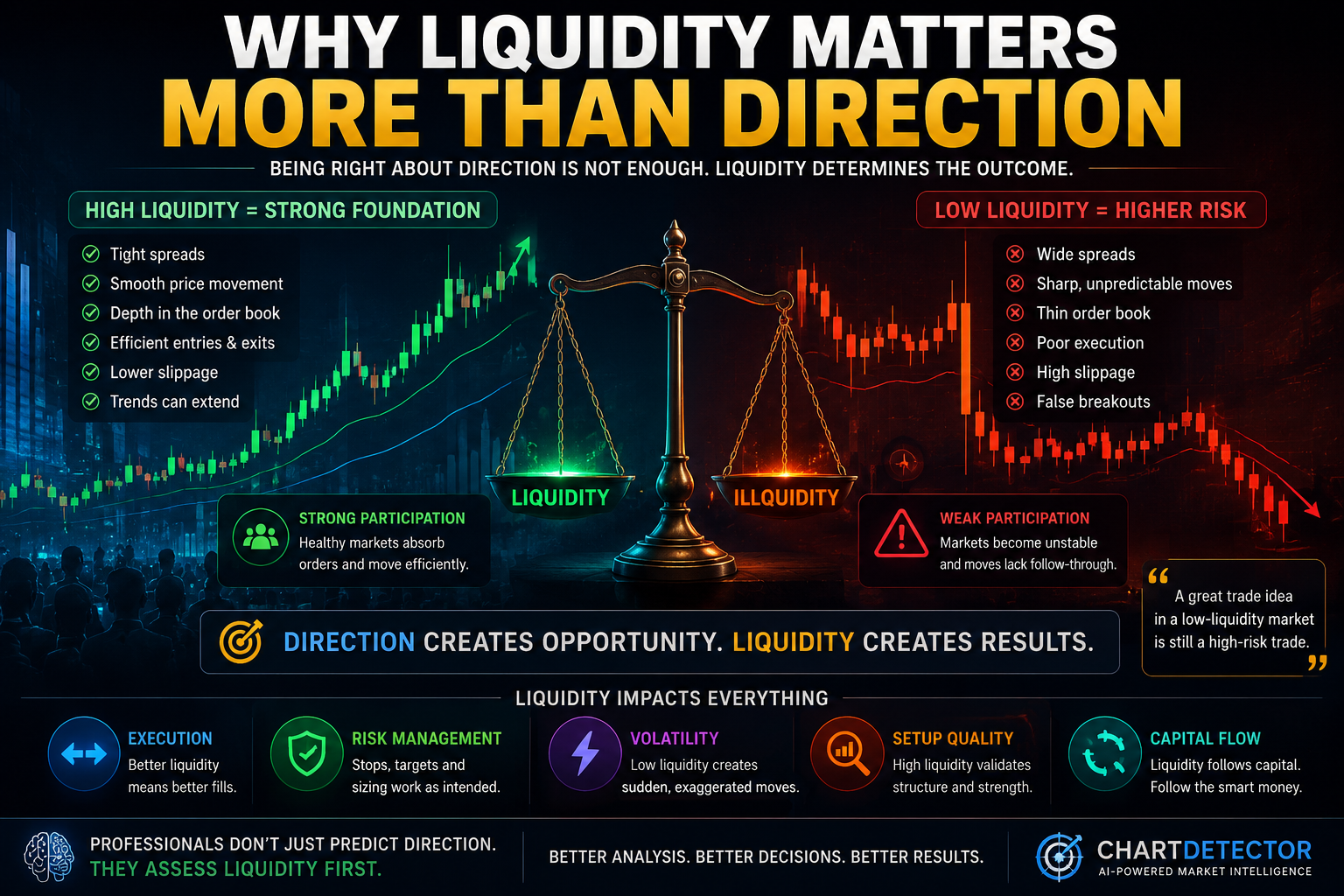
Why Liquidity Matters More Than Direction
Most traders focus on whether a market will move higher or lower. Professional traders focus on liquidity. This article explains why liquidity drives price movement, how it influences risk, and why being right about direction is often not enough.
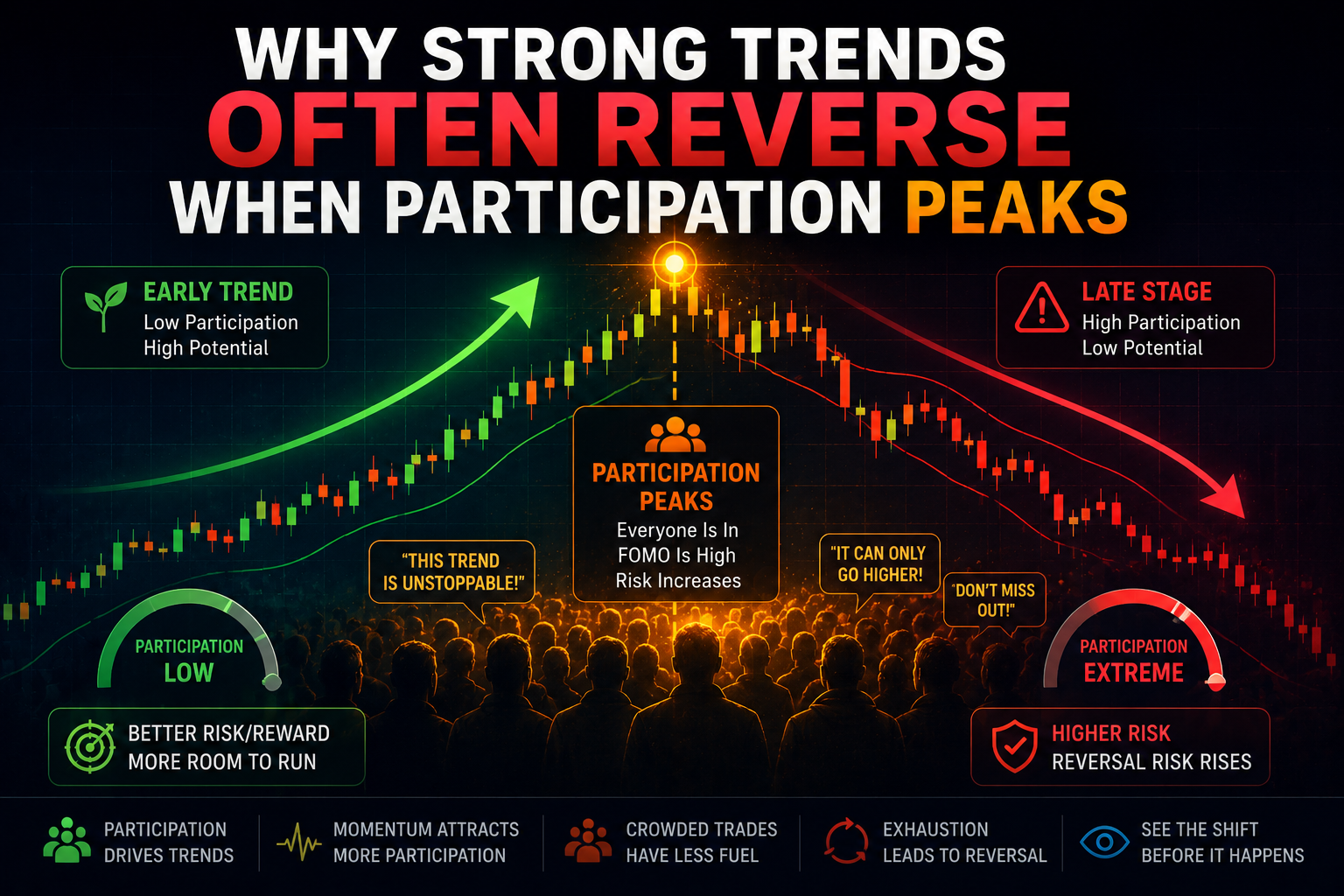
Why Strong Trends Often Reverse When Participation Peaks
Strong trends often appear safest near their peak, yet this is frequently where reversal risk begins increasing. This article explains how participation saturation develops and why late-stage momentum can weaken market structure.