
Divergence Is Context Not a Signal
Divergence is often treated as a trade signal, yet on its own it rarely provides sufficient justification for action. This article explains why divergence is contextual information rather than a trigger and how professionals interpret it within broader market conditions.
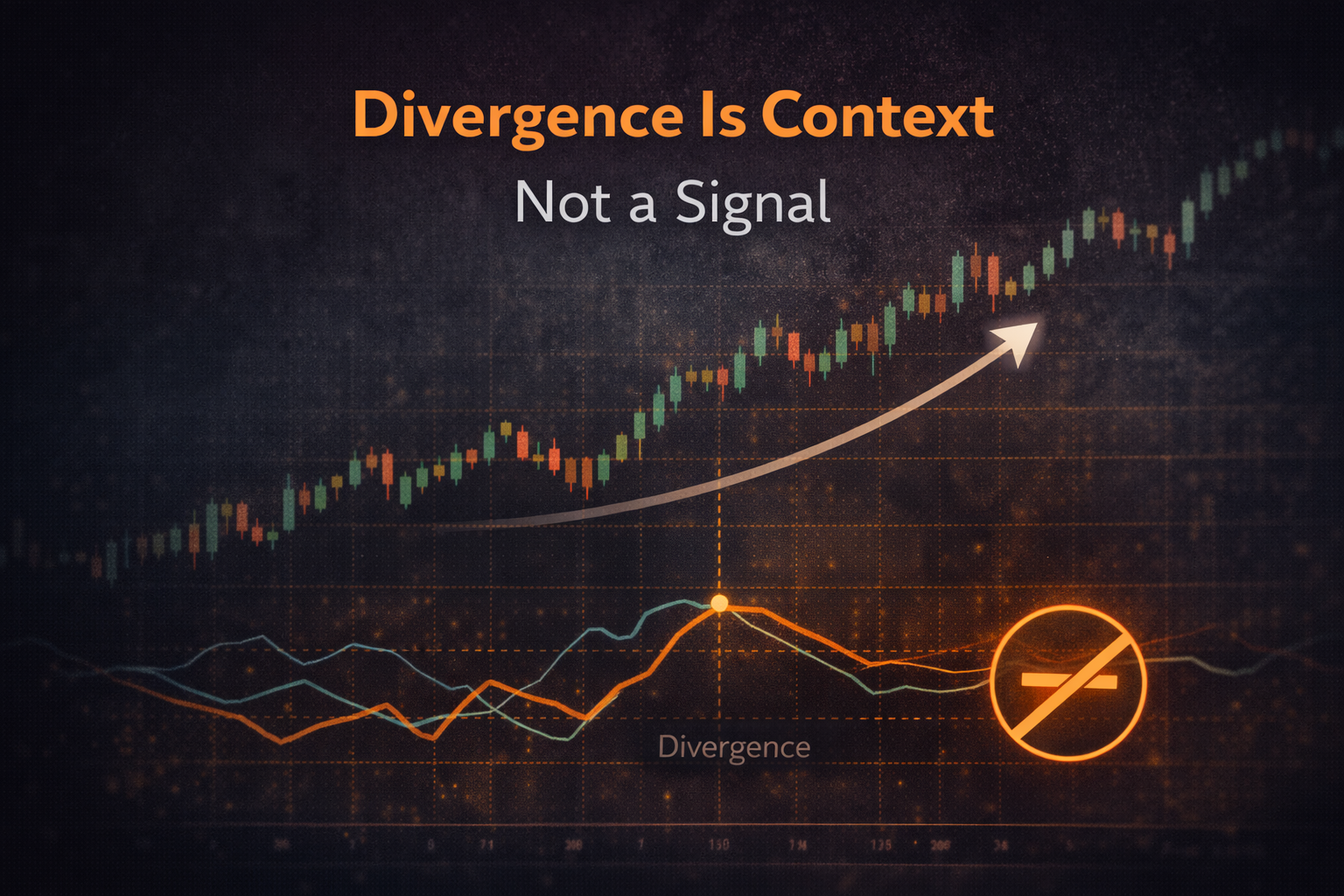
Divergence is one of the most widely discussed concepts in technical analysis, and it is also one of the most frequently misused. Many traders are taught to treat divergence as a signal to enter a trade, expecting price to reverse simply because momentum no longer confirms direction.
This interpretation assigns divergence more authority than it deserves. Divergence does not instruct price to change direction. It describes a relationship between price movement and the strength of that movement, which must be interpreted within context.
Divergence occurs when price continues in one direction while an indicator measuring momentum fails to confirm that movement. This condition highlights a change in behavior, not a decision point. Momentum may be slowing, but slowing does not imply reversal.
Professional traders do not treat divergence as a standalone trigger. They view it as contextual information that raises questions about sustainability, risk, and expectations. Divergence invites scrutiny rather than action.
A useful mental model is to think of divergence as friction rather than force. It suggests resistance building beneath the surface, but it does not determine when or whether that resistance will overcome price movement. Markets can continue trending despite divergence for extended periods.
The consequences of treating divergence as a signal are predictable. Traders enter countertrend positions prematurely, absorb repeated losses, and lose confidence in a concept that is behaving exactly as intended. The issue is not divergence itself, but how it is interpreted.
Context determines whether divergence matters. In range-bound environments, divergence may carry more weight because momentum tends to mean revert. In strong trends, divergence often reflects consolidation or controlled pullbacks rather than impending reversal.
Divergence also varies by timeframe. A divergence visible on a lower timeframe may be insignificant within the structure of a higher timeframe trend. Professionals always anchor interpretation to the dominant timeframe before assigning meaning to divergence signals.
When divergence aligns with other contextual factors such as structural resistance, volatility expansion, or weakening participation, it can contribute to a broader case for caution. Even then, it remains one input rather than a decision in isolation.
ChartDetector.ai evaluates divergence within this broader framework by considering how momentum behavior interacts with structure, trend, and risk conditions. Divergence is treated as contextual information that may alter expectations rather than as a directive to act.
Divergence does not tell traders what to do. It tells them what to question. The next time divergence appears, the more productive response is not to trade against price, but to reassess assumptions about strength, risk, and sustainability.
Related Articles

Why Markets Punish Consensus
When everyone agrees on where the market is going, the opportunity is often already diminishing. This article explains why consensus creates comfort but rarely creates edge, and why professional traders pay close attention to crowd positioning.
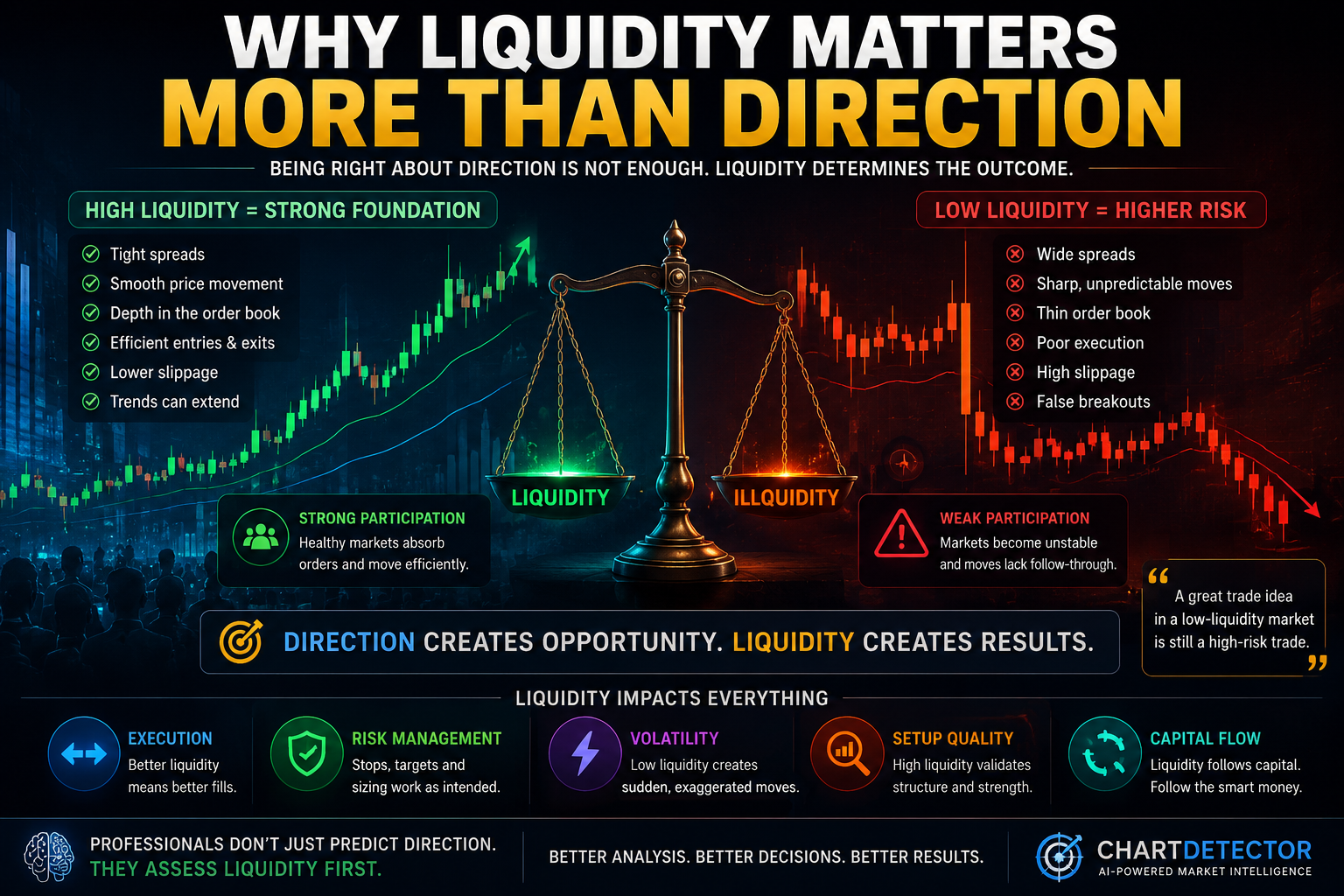
Why Liquidity Matters More Than Direction
Most traders focus on whether a market will move higher or lower. Professional traders focus on liquidity. This article explains why liquidity drives price movement, how it influences risk, and why being right about direction is often not enough.
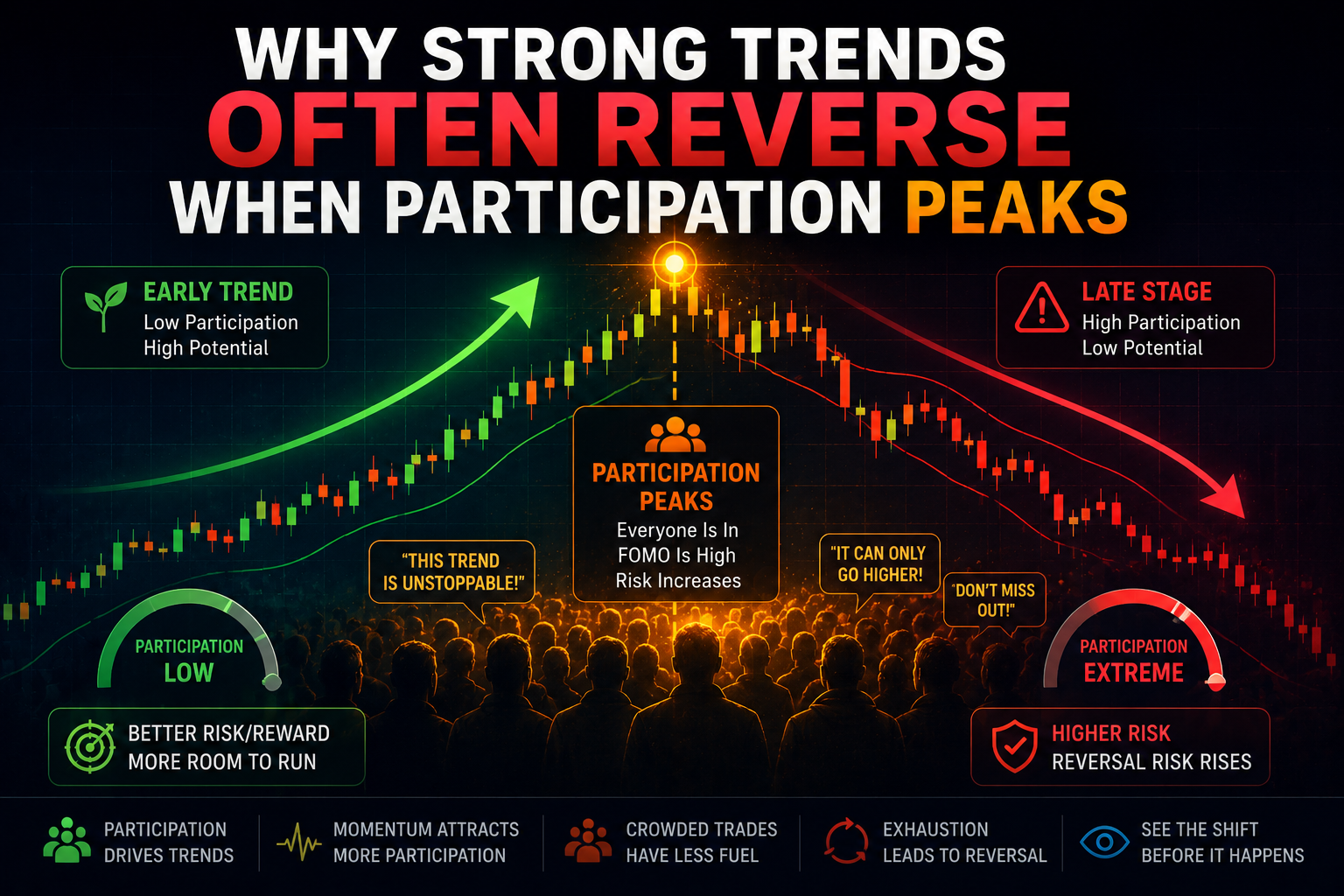
Why Strong Trends Often Reverse When Participation Peaks
Strong trends often appear safest near their peak, yet this is frequently where reversal risk begins increasing. This article explains how participation saturation develops and why late-stage momentum can weaken market structure.