Why Fewer Trades Lead to Better Results
Many traders believe success comes from finding more opportunities, but professional traders focus on reducing participation. This article explains why fewer trades often lead to better outcomes and how selectivity improves consistency.
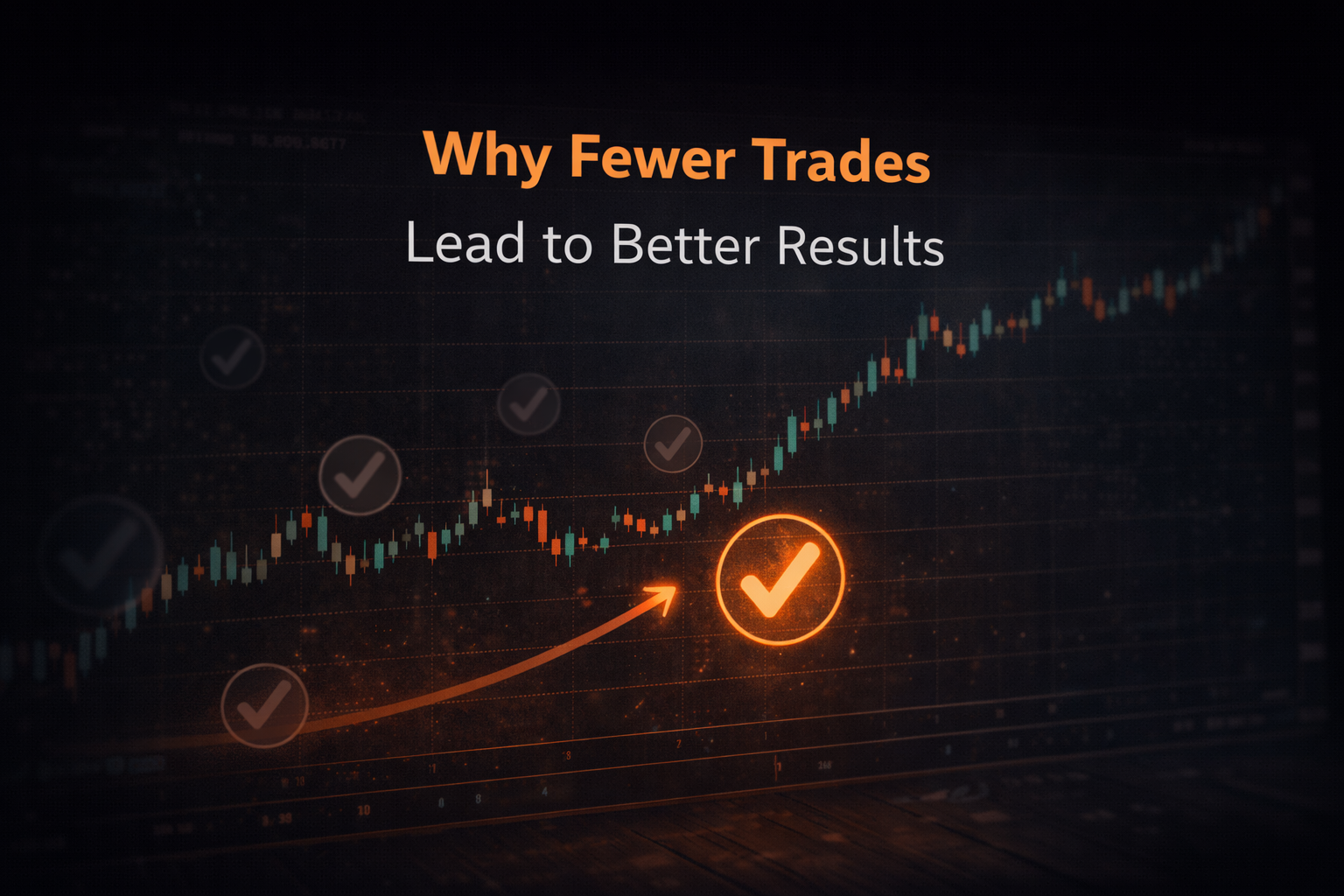
Many traders equate activity with progress. They believe that taking more trades increases opportunity and that staying active keeps them aligned with the market. Professional traders learn the opposite lesson over time: selectivity, not frequency, is what produces consistent results.
Markets offer endless signals, but not every signal represents opportunity. Price moves constantly, yet only a small fraction of those movements occur under conditions that justify risk. Professionals understand that the job is not to participate often, but to participate when conditions are favorable.
Overtrading is rarely caused by poor analysis. It is usually driven by impatience, fear of missing out, or the belief that being flat is a form of failure. These pressures lead traders to lower their standards and accept trades that do not meet their original criteria.
The consequences are subtle but damaging. Small losses accumulate, focus deteriorates, and emotional fatigue sets in. Traders begin reacting rather than evaluating, which further reduces decision quality.
Professional traders treat inactivity as a position. Waiting is not avoidance; it is risk control. By staying out of low-quality conditions, they preserve capital and mental clarity for moments when structure, risk, and context align.
A useful mental distinction is to separate opportunity from availability. Markets are always available, but opportunity is conditional. When traders internalize this, the urge to force trades diminishes.
Fewer trades also improve learning. When decisions are selective, outcomes provide clearer feedback. Losses can be analyzed without noise, and wins are less likely to be attributed to randomness.
ChartDetector.ai supports this mindset by emphasizing validation over signal volume. The platform highlights conditions where risk is unclear or asymmetry is unfavorable, helping traders step aside rather than participate out of habit.
Trading less does not mean caring less. It means caring more about the quality of each decision. Over time, fewer but better-aligned trades tend to produce smoother equity curves and stronger discipline.
The next time a trade opportunity appears, the most important question is not whether it exists, but whether it truly deserves participation.
Related Articles
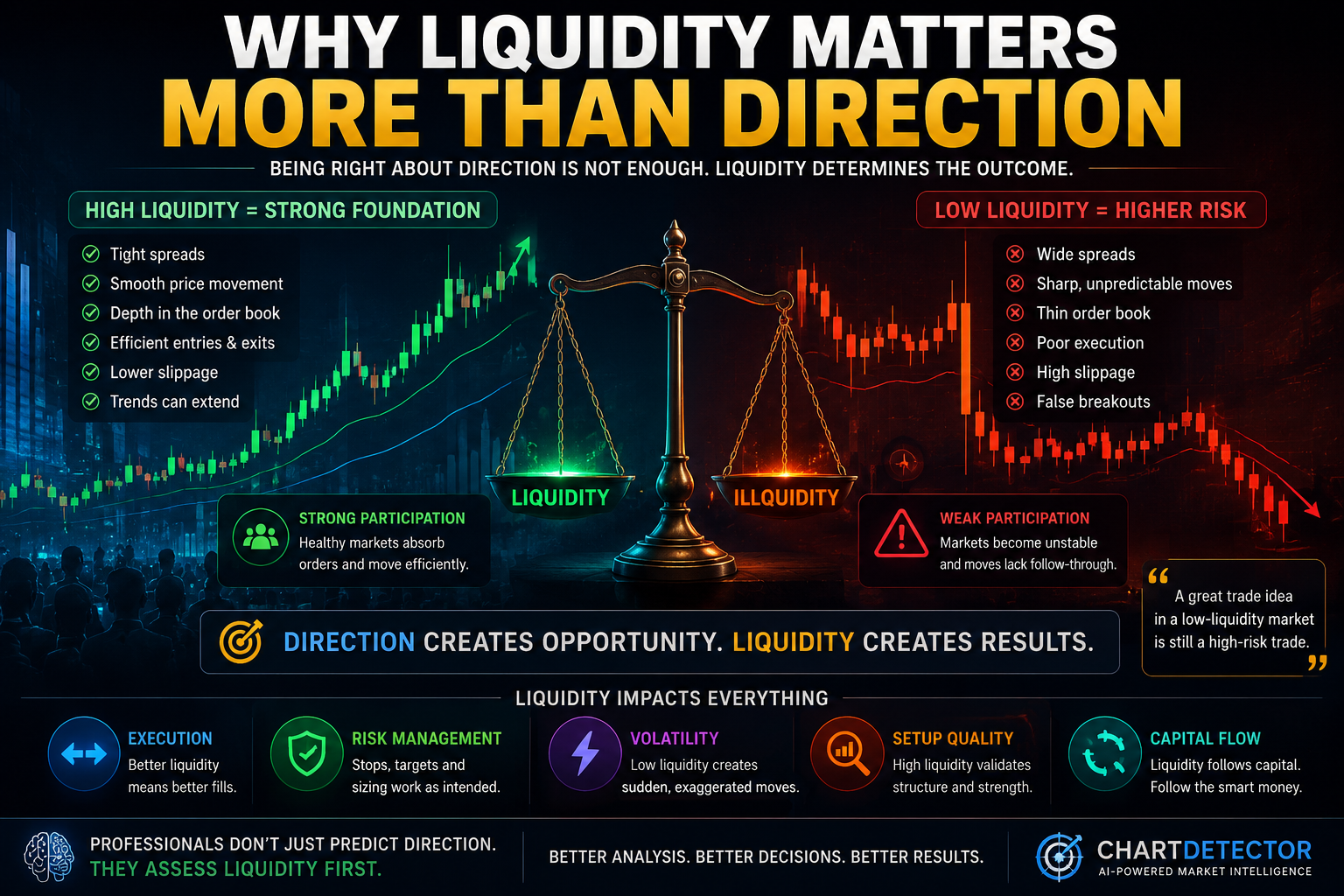
Why Liquidity Matters More Than Direction
Most traders focus on whether a market will move higher or lower. Professional traders focus on liquidity. This article explains why liquidity drives price movement, how it influences risk, and why being right about direction is often not enough.
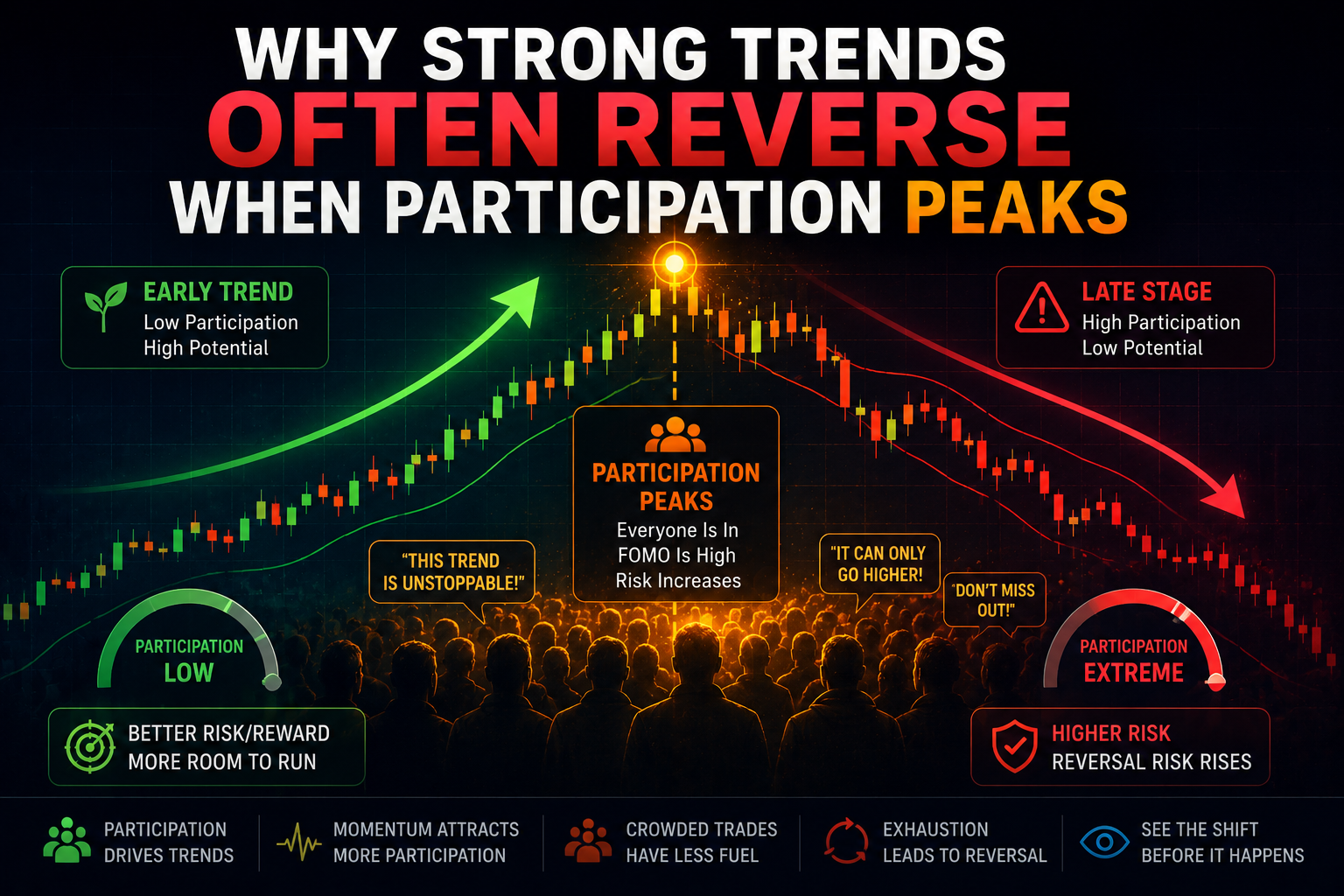
Why Strong Trends Often Reverse When Participation Peaks
Strong trends often appear safest near their peak, yet this is frequently where reversal risk begins increasing. This article explains how participation saturation develops and why late-stage momentum can weaken market structure.
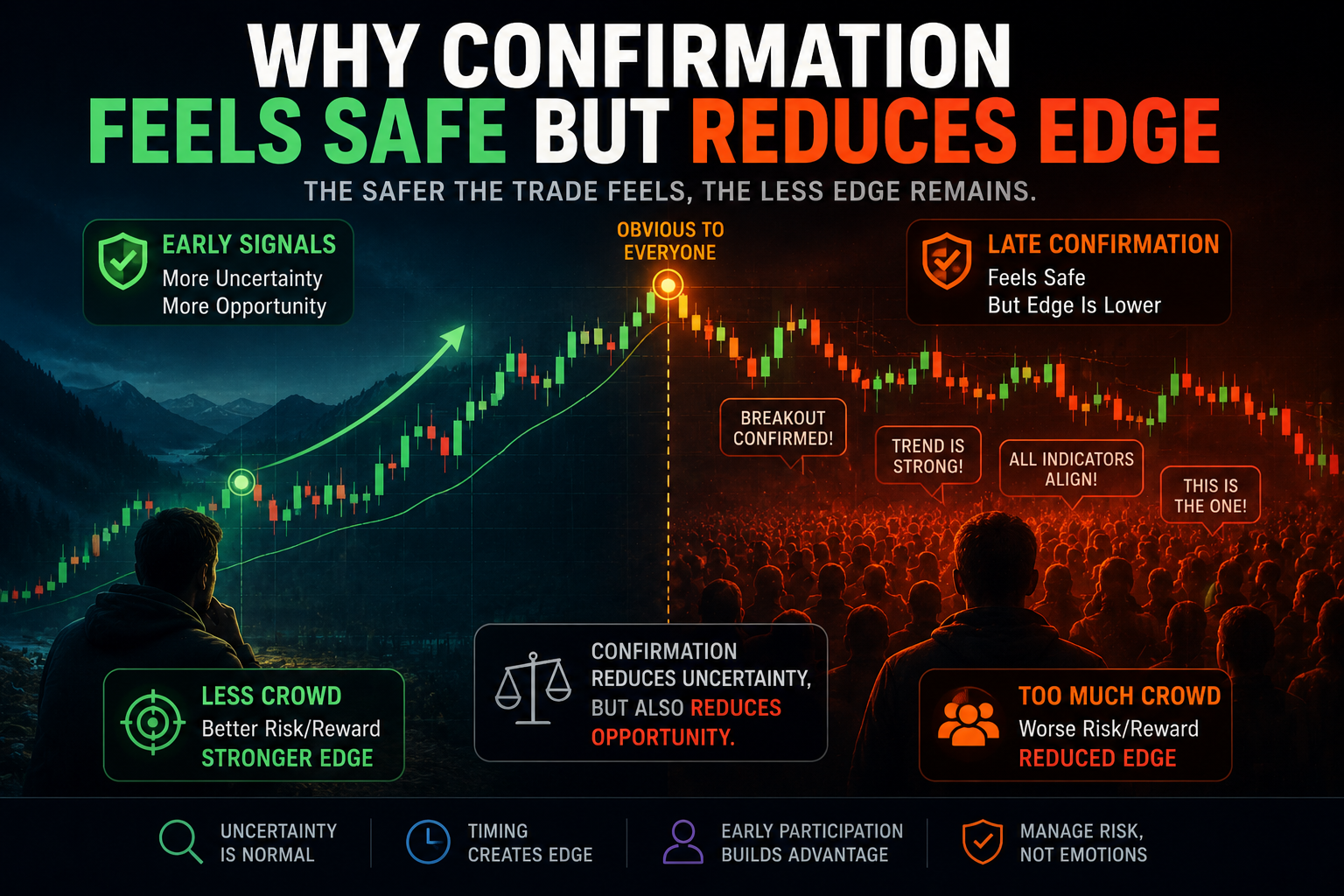
Why Confirmation Feels Safe But Reduces Edge
Confirmation reduces uncertainty, but it often reduces opportunity as well. This article explains why traders naturally seek confirmation, how it leads to crowded positioning, and why professional traders balance validation with timing.