
Why Indicators Work Best When You Stop Optimizing Them
Many traders constantly adjust indicator settings in search of precision, yet this behavior often degrades performance. This article explains why over-optimization weakens indicators, how it creates false confidence, and why professional traders prioritize stability over perfect fit.
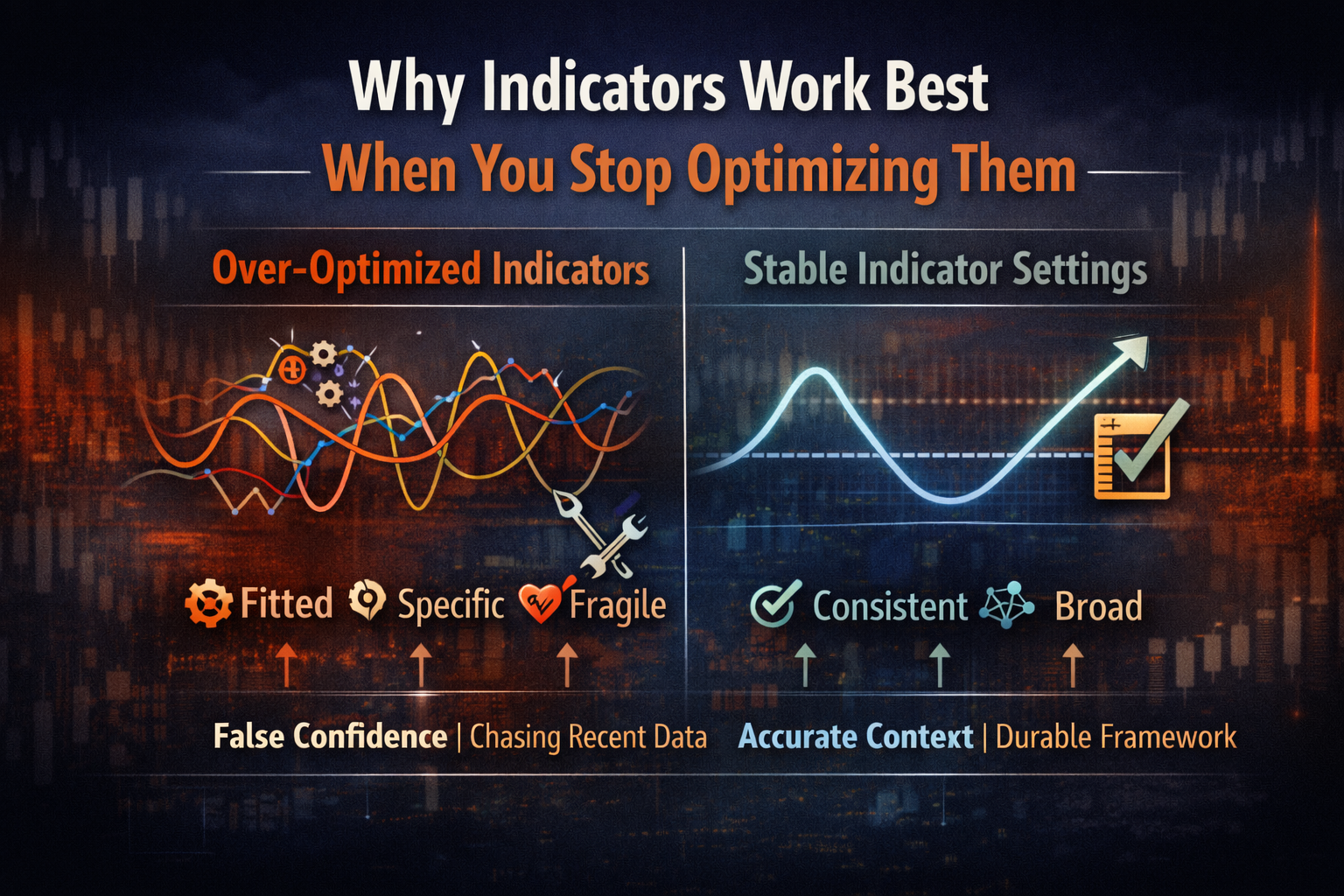
Indicator optimization is one of the most common habits among developing traders. Settings are adjusted after every losing trade, parameters are refined to fit recent price action, and historical performance is used to justify increasingly specific configurations. While this process feels analytical, it often undermines the very purpose indicators are meant to serve.
Indicators are abstractions. They simplify complex price behavior into interpretable measures such as trend, momentum, or volatility. Their value lies in consistency, not precision. When traders continuously optimize settings, they sacrifice stability in exchange for alignment with recent data.
This creates a dangerous illusion of improvement. Optimized indicators appear to perform well in hindsight because they are fitted to past conditions. When market behavior shifts, those finely tuned parameters lose relevance, leaving traders with signals that no longer describe the current environment.
Professional traders understand that markets are non-stationary. Conditions evolve, regimes change, and relationships that held yesterday may weaken tomorrow. Indicators designed to adapt automatically through price behavior are more robust than those manually adjusted to chase accuracy.
Over-optimization also increases cognitive bias. When traders invest time refining settings, they become emotionally attached to the resulting signals. Disagreement between price and indicator is dismissed rather than examined, and losses are attributed to temporary anomalies instead of flawed assumptions.
A useful mental distinction is to separate calibration from optimization. Calibration ensures that an indicator broadly reflects the behavior it is meant to measure. Optimization attempts to force alignment with specific outcomes. Professionals calibrate once and then focus on interpretation rather than adjustment.
Stable indicators improve decision quality by providing a consistent reference point. When settings remain fixed, changes in indicator behavior reflect changes in market conditions rather than parameter manipulation. This clarity supports learning and reduces noise.
Many professional traders use default or minimally adjusted settings for this reason. Defaults are not optimal, but they are robust across a wide range of conditions. Robustness matters more than precision in environments defined by uncertainty.
The desire to optimize often stems from discomfort with ambiguity. When signals fail, adjusting parameters feels like regaining control. In reality, it masks the underlying issue, which is usually contextual rather than technical.
ChartDetector reflects this professional approach by emphasizing interpretation over configuration. Indicators are evaluated within broader market context, reducing the perceived need to constantly refine settings in pursuit of certainty.
Indicators do not fail because they are imperfect. They fail when traders expect them to adapt to every market condition without adjusting expectations. When optimization stops, indicators regain their intended role as stable descriptive tools.
The next time an indicator appears inaccurate, consider whether the issue lies in its settings or in the expectation that it should perfectly track a constantly changing market.
Related Articles

Why Markets Punish Consensus
When everyone agrees on where the market is going, the opportunity is often already diminishing. This article explains why consensus creates comfort but rarely creates edge, and why professional traders pay close attention to crowd positioning.
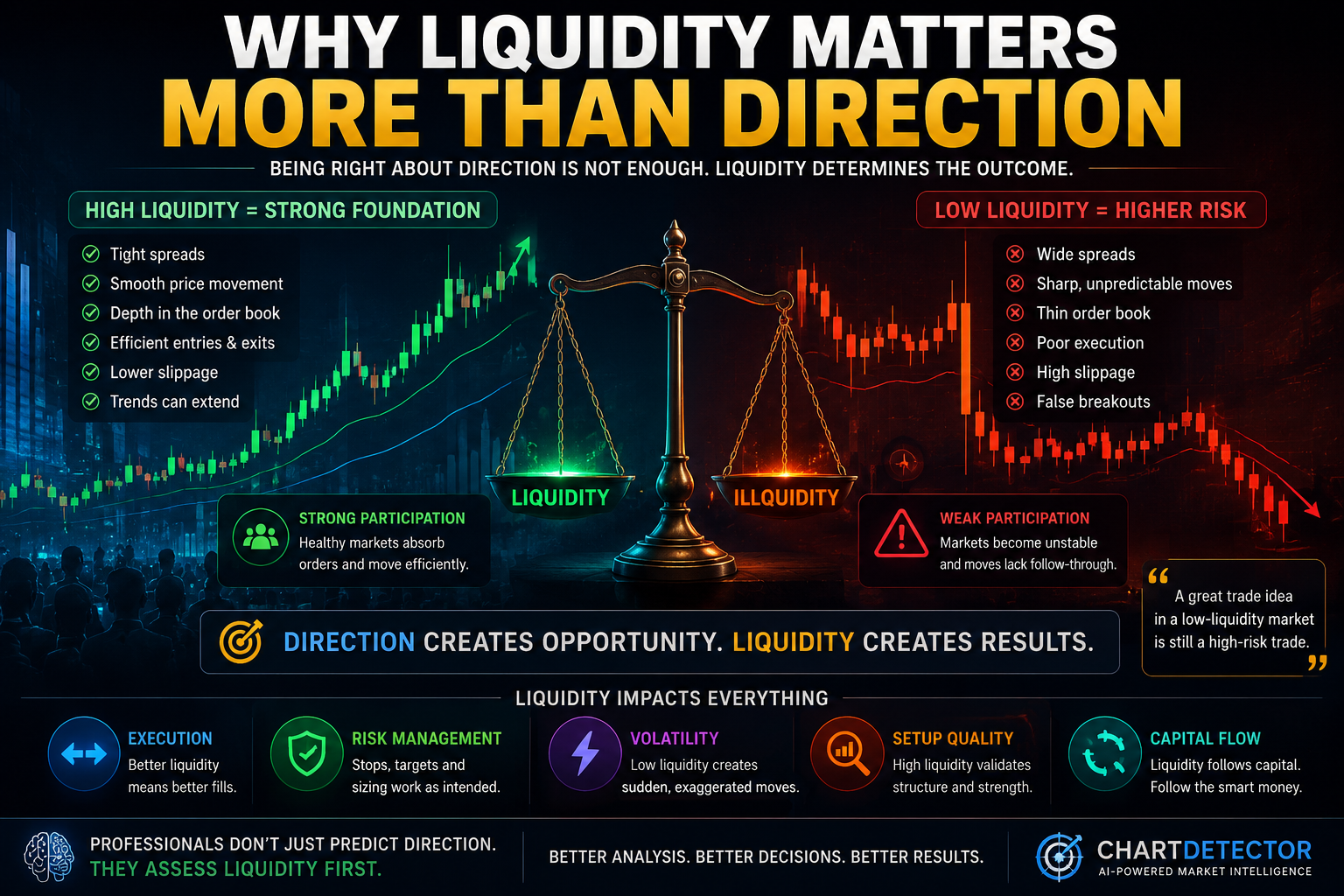
Why Liquidity Matters More Than Direction
Most traders focus on whether a market will move higher or lower. Professional traders focus on liquidity. This article explains why liquidity drives price movement, how it influences risk, and why being right about direction is often not enough.
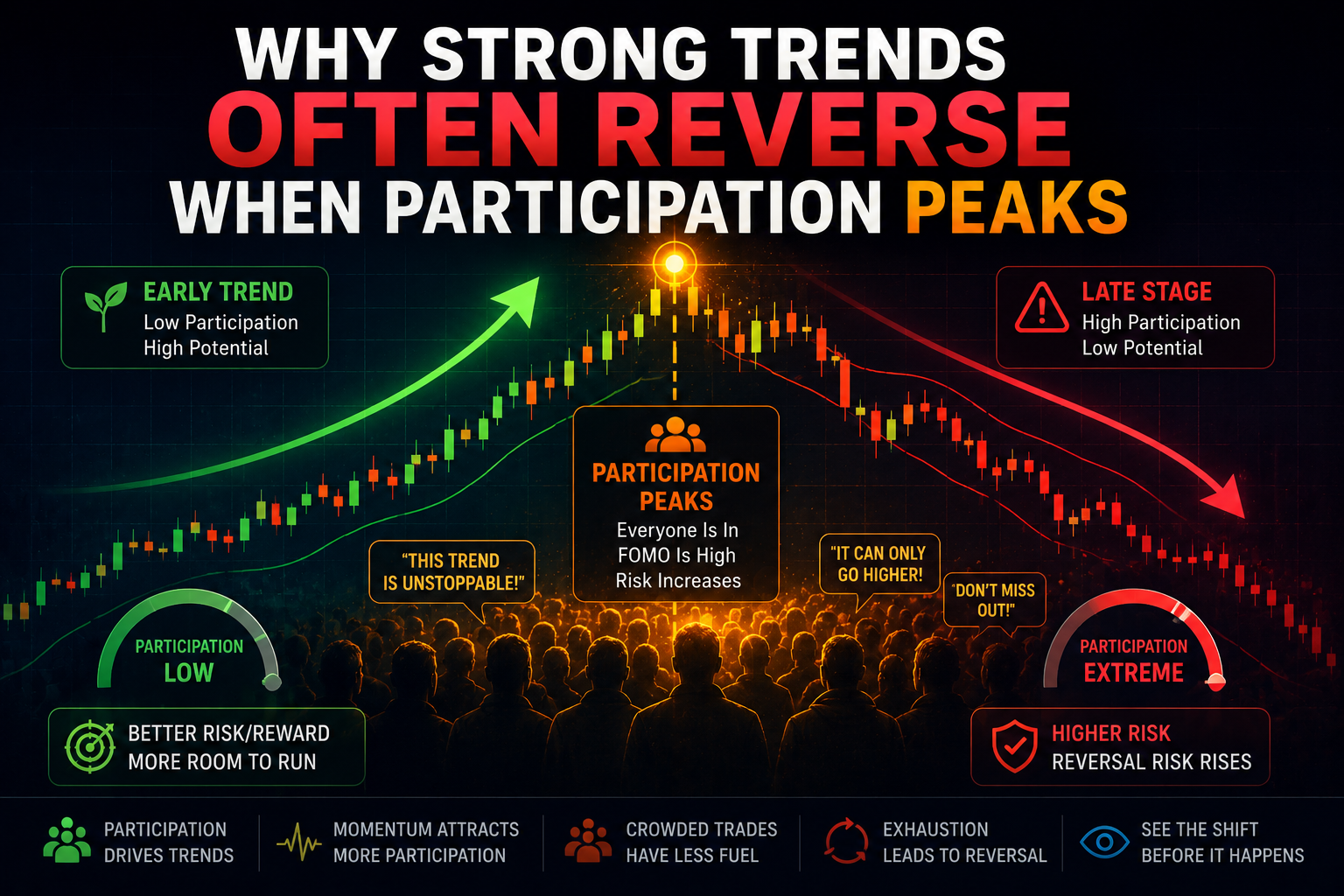
Why Strong Trends Often Reverse When Participation Peaks
Strong trends often appear safest near their peak, yet this is frequently where reversal risk begins increasing. This article explains how participation saturation develops and why late-stage momentum can weaken market structure.