
Why Patience Is an Execution Skill Not a Personality Trait
Patience is often described as a personality trait, yet in trading it is a learned execution skill. This article explains why patience is not passive waiting, how it directly impacts decision quality, and why professionals treat it as part of their trading process.

Patience is often described as a personal quality that some traders possess while others lack. It is framed as a matter of temperament, implying that disciplined trading depends on personality rather than process. Professional traders understand patience differently. It is not a passive trait. It is an active execution skill.
In trading, patience is expressed through decisions, not emotions. It appears in the ability to wait for conditions that align with a defined framework, to avoid trades that do not meet criteria, and to remain inactive when the market does not justify participation. This behavior is not accidental. It is structured.
Many traders struggle with patience because they associate activity with progress. Watching the market without taking action can feel unproductive. This perception leads to overtrading, where decisions are made to reduce discomfort rather than to capitalize on opportunity.
Professional traders separate opportunity from activity. They recognize that markets do not continuously provide favorable conditions. Periods of low-quality structure, unstable volatility, or unclear participation are common. Choosing not to trade in these conditions is not hesitation. It is disciplined execution.
Patience also influences trade management. Once in a position, traders often feel compelled to act prematurely. Profits are taken too early, positions are adjusted unnecessarily, and exits are driven by short-term noise rather than structural change. In each case, impatience disrupts the original trade logic.
Developing patience requires predefined criteria. When entry conditions, invalidation levels, and risk parameters are clearly established, the need for impulsive decisions decreases. The trader is no longer reacting to every price movement but is instead responding to meaningful changes in structure.
This shifts patience from an emotional challenge to a procedural outcome. If a setup does not meet criteria, no trade is taken. If structure remains intact, the position is held. If invalidation occurs, the trade is exited. The process defines behavior.
Patience is therefore closely tied to clarity. Unclear frameworks create uncertainty, and uncertainty invites impulsive action. Clear frameworks reduce decision friction and make patience the default rather than the exception.
ChartDetector reinforces this approach by validating whether market conditions support a trade before execution. When traders rely on structured validation instead of intuition alone, waiting becomes easier because decisions are grounded in objective criteria.
It is important to recognize that patience is not inaction. It is selective action. It ensures that capital is deployed only when conditions justify risk.
Traders who lack patience often believe they need more discipline. In reality, they often need better structure. When the process is defined, patience becomes a natural extension of execution.
The next time the urge to trade appears, the more useful question is not whether an opportunity exists, but whether the conditions meet the standard required to justify participation.
Related Articles
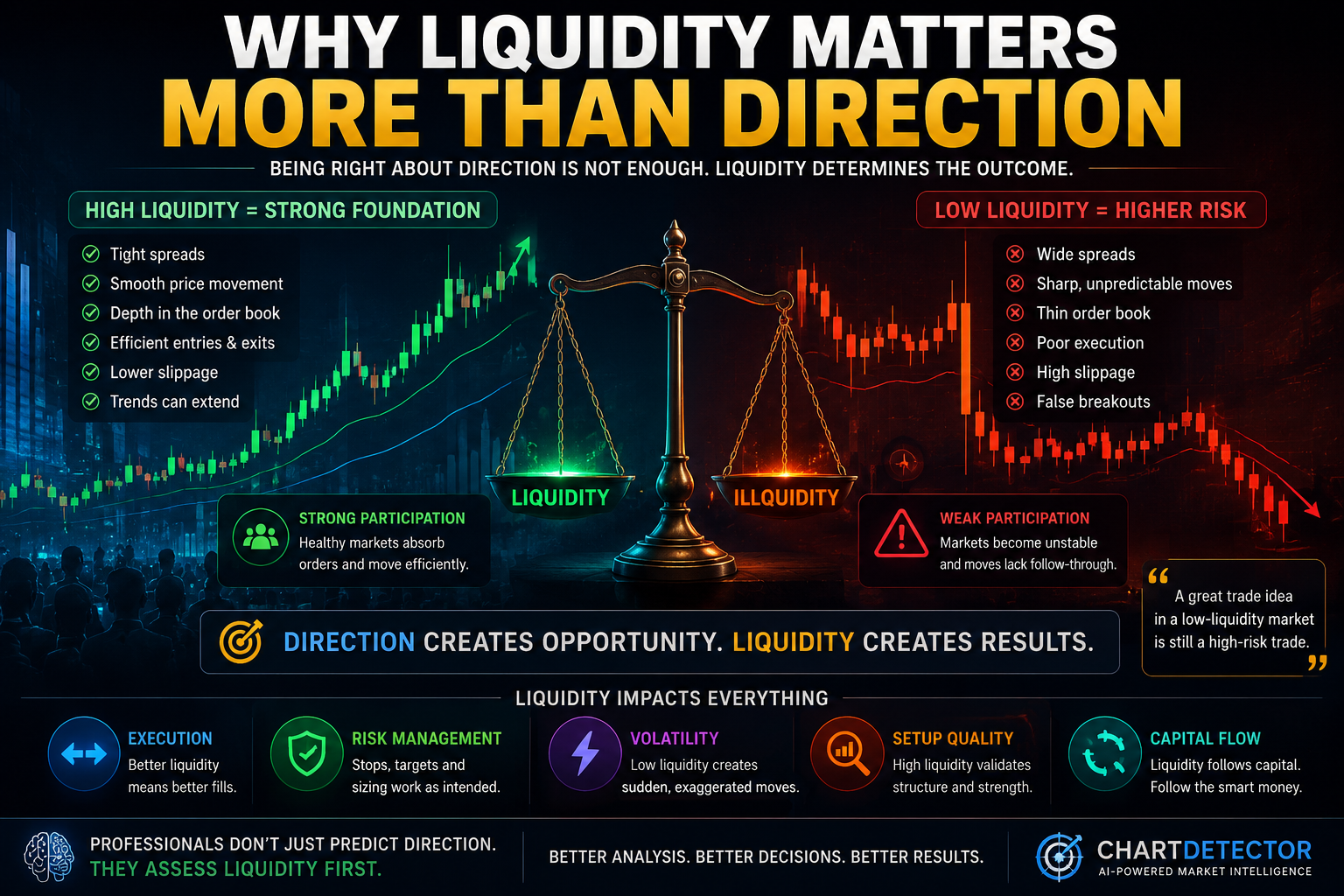
Why Liquidity Matters More Than Direction
Most traders focus on whether a market will move higher or lower. Professional traders focus on liquidity. This article explains why liquidity drives price movement, how it influences risk, and why being right about direction is often not enough.
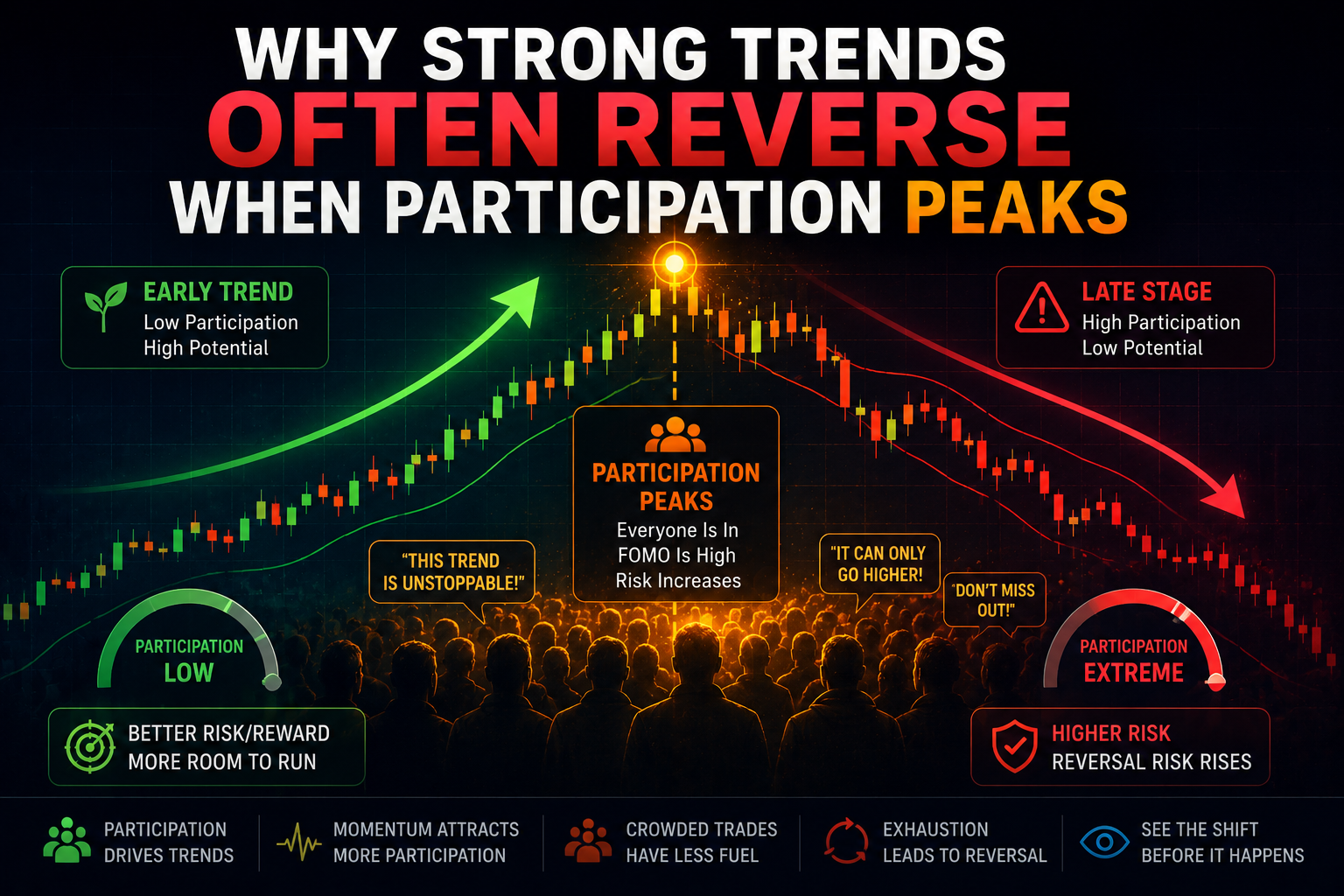
Why Strong Trends Often Reverse When Participation Peaks
Strong trends often appear safest near their peak, yet this is frequently where reversal risk begins increasing. This article explains how participation saturation develops and why late-stage momentum can weaken market structure.
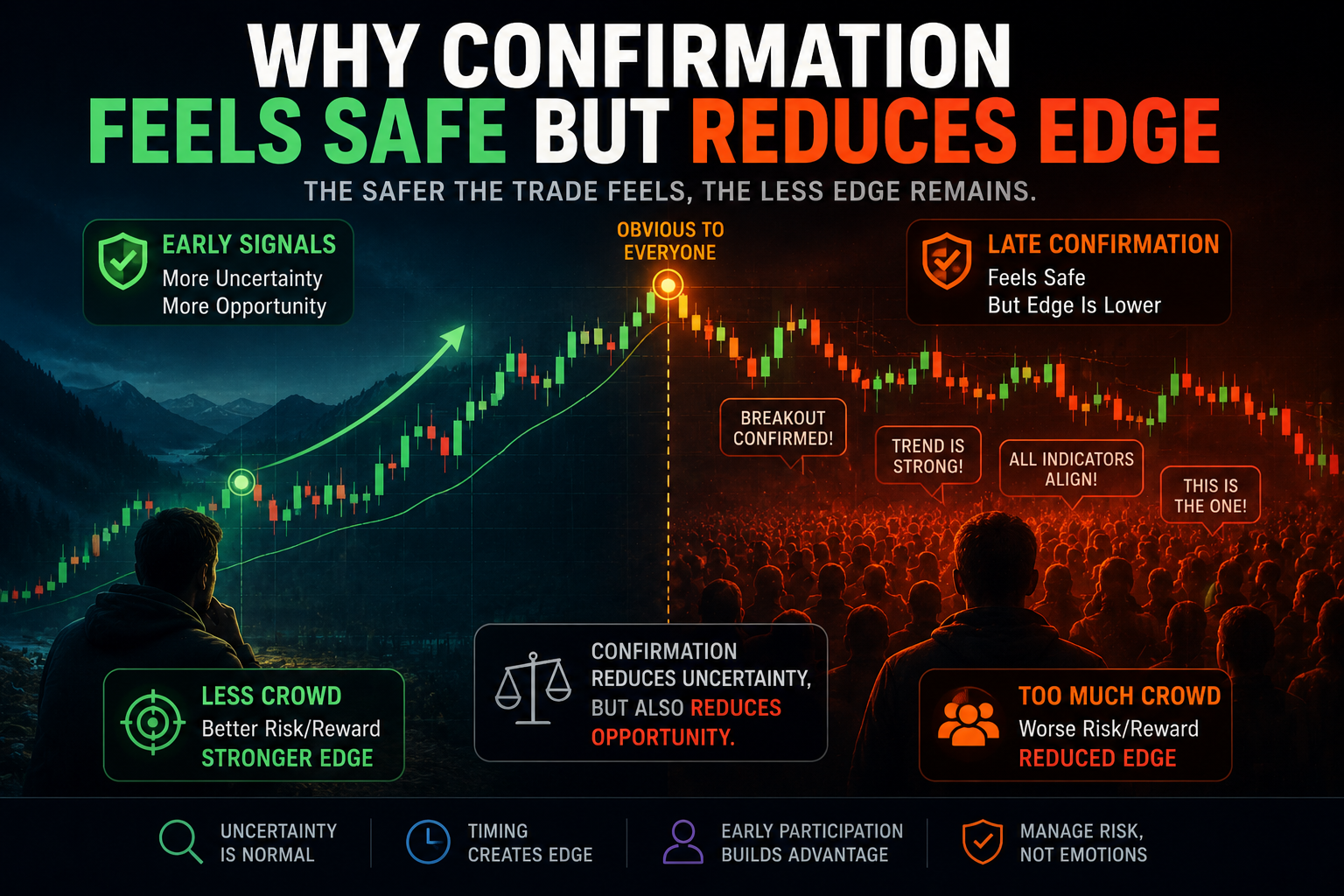
Why Confirmation Feels Safe But Reduces Edge
Confirmation reduces uncertainty, but it often reduces opportunity as well. This article explains why traders naturally seek confirmation, how it leads to crowded positioning, and why professional traders balance validation with timing.