
Why Risk Comes Before Reward Always
Many traders evaluate potential profit before understanding downside exposure, while professional traders reverse this order. This article explains why risk assessment must come first and how a risk-first mindset leads to more consistent decision-making across all asset classes.
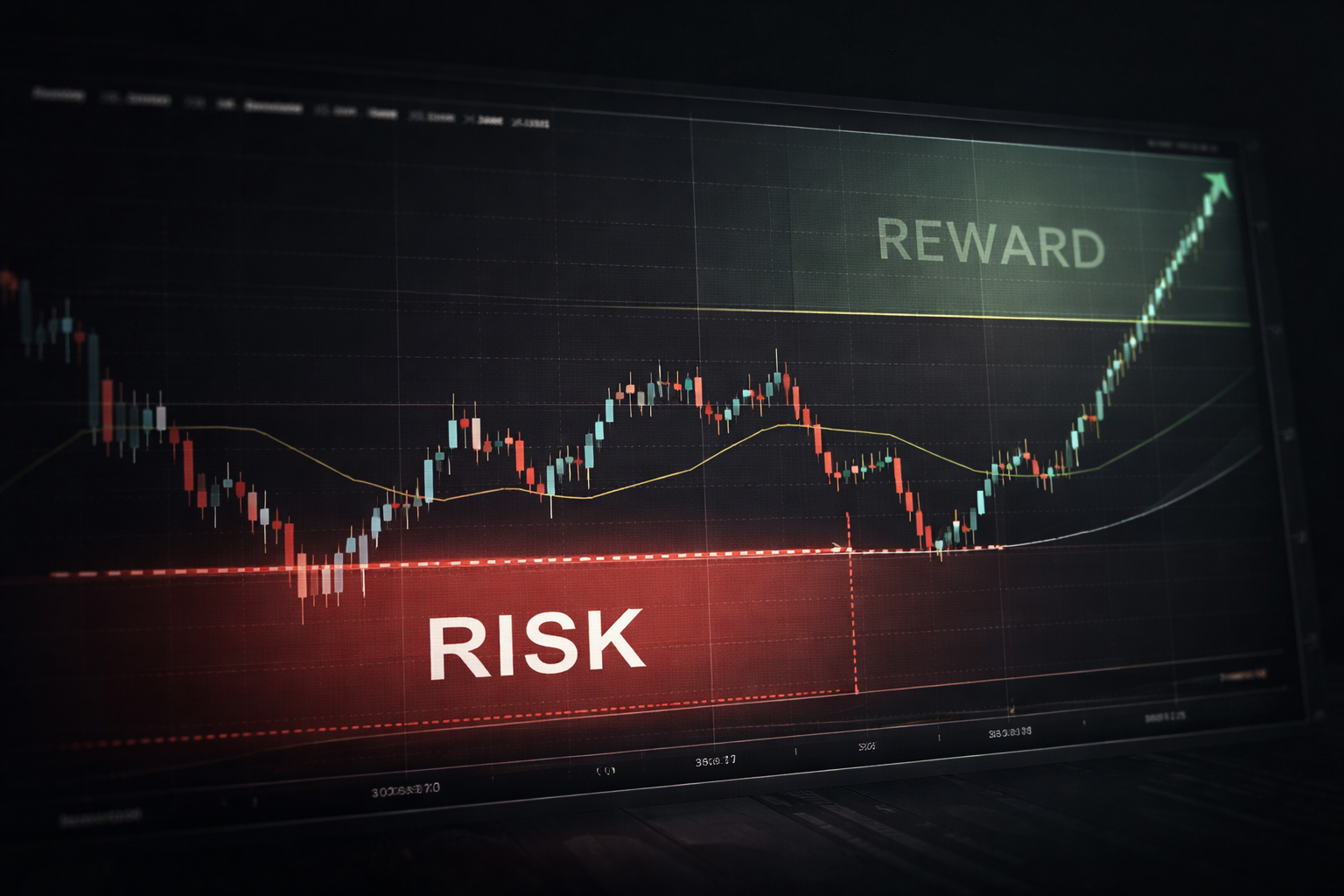
Many traders begin each trade by estimating how much profit is possible, yet professional traders approach the same decision from the opposite direction. They first determine how much can be lost if the underlying idea proves to be wrong, because risk is immediate and unavoidable the moment capital is committed.
This difference in sequencing is practical rather than philosophical. Reward exists only if price behaves as expected, while risk is present regardless of outcome. When traders internalize this distinction, decision-making becomes more disciplined and less emotionally reactive.
Focusing on reward first is appealing because it is easy to visualize. Charts naturally invite projection, and the human mind is biased toward favorable outcomes. The problem is that markets do not owe continuation, and even well-structured setups can fail due to shifts in volatility, liquidity, or higher-timeframe conditions that have nothing to do with the signal itself.
When reward becomes the anchor for decision-making, traders often justify excessive exposure in pursuit of opportunity. Position sizes increase, exits become vague, and emotional attachment replaces objective assessment. Over time, this pattern erodes consistency, even when the underlying analysis is sound.
Professional traders define risk before entry by identifying invalidation. They determine where price behavior would clearly indicate that the premise behind the trade no longer holds. Only after this level is clearly established does it make sense to evaluate position size and potential reward.
A useful mental framework is to recognize that reward is optional, while risk is mandatory. If risk cannot be clearly defined, the trade itself is not ready to be taken, regardless of how attractive the potential upside may appear.
Ignoring this framework produces predictable consequences in real trading. Losses are not only larger, but more difficult to recover from, as drawdowns deepen and decision-making becomes increasingly reactive. Traders begin adjusting stops and targets under pressure, attempting to salvage positions that were never properly framed.
Risk should not be confused with a stop loss. A stop loss is a tool, while risk is a broader framework that accounts for market structure, volatility behavior, time horizon, and correlation across positions. This perspective allows traders to remain resilient when price does not behave cleanly or execution is imperfect.
ChartDetector reinforces this professional approach by evaluating risk conditions before emphasizing opportunity. Trade ideas are assessed for structural validity and volatility alignment so traders can avoid situations where downside exposure outweighs potential benefit.
Reward attracts traders to the market, but risk determines who remains. Before entering the next trade, the most important question is not how far price might go, but where the idea fails if it is wrong.
Related Articles
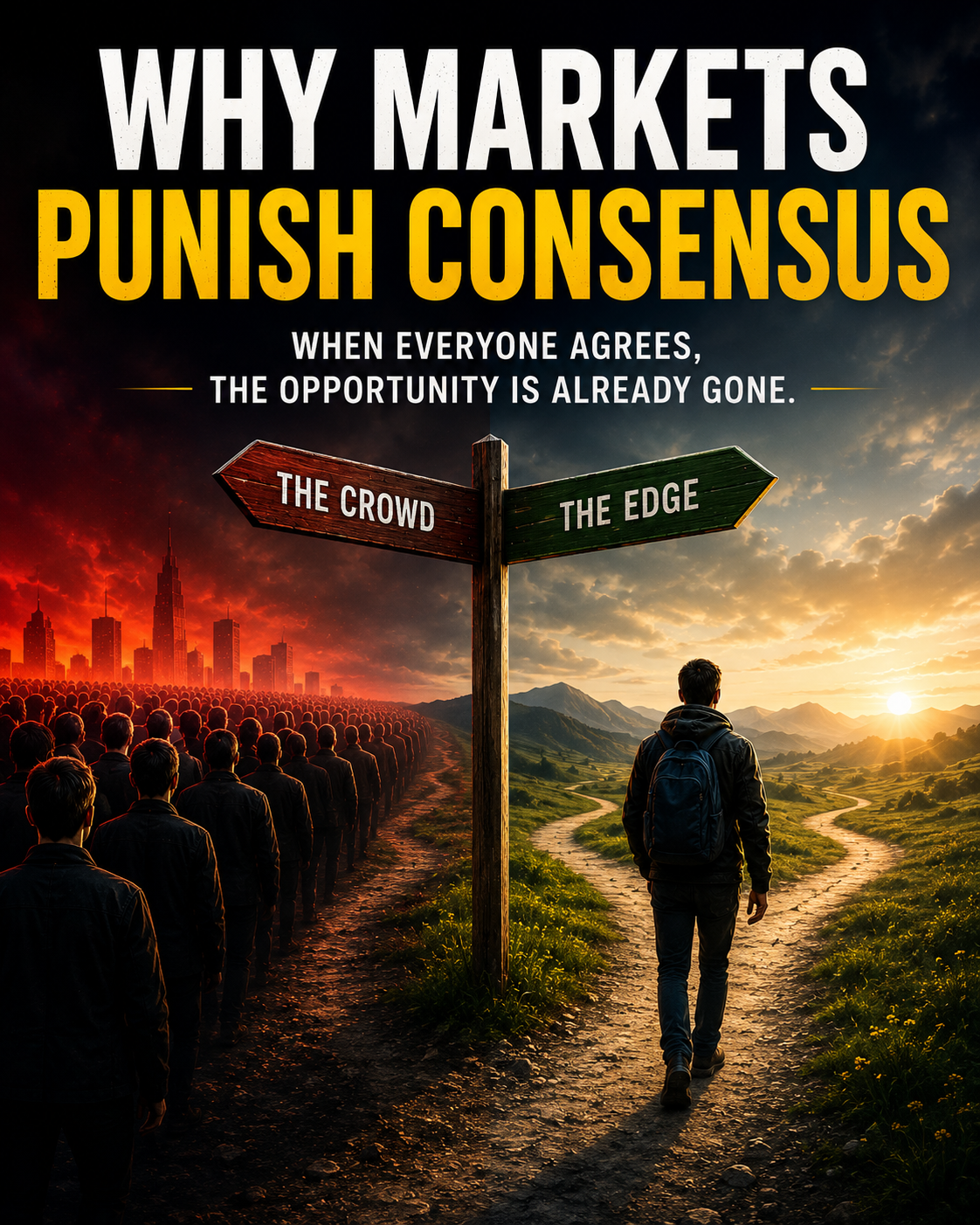
Why Markets Punish Consensus
When everyone agrees on where the market is going, the opportunity is often already diminishing. This article explains why consensus creates comfort but rarely creates edge, and why professional traders pay close attention to crowd positioning.
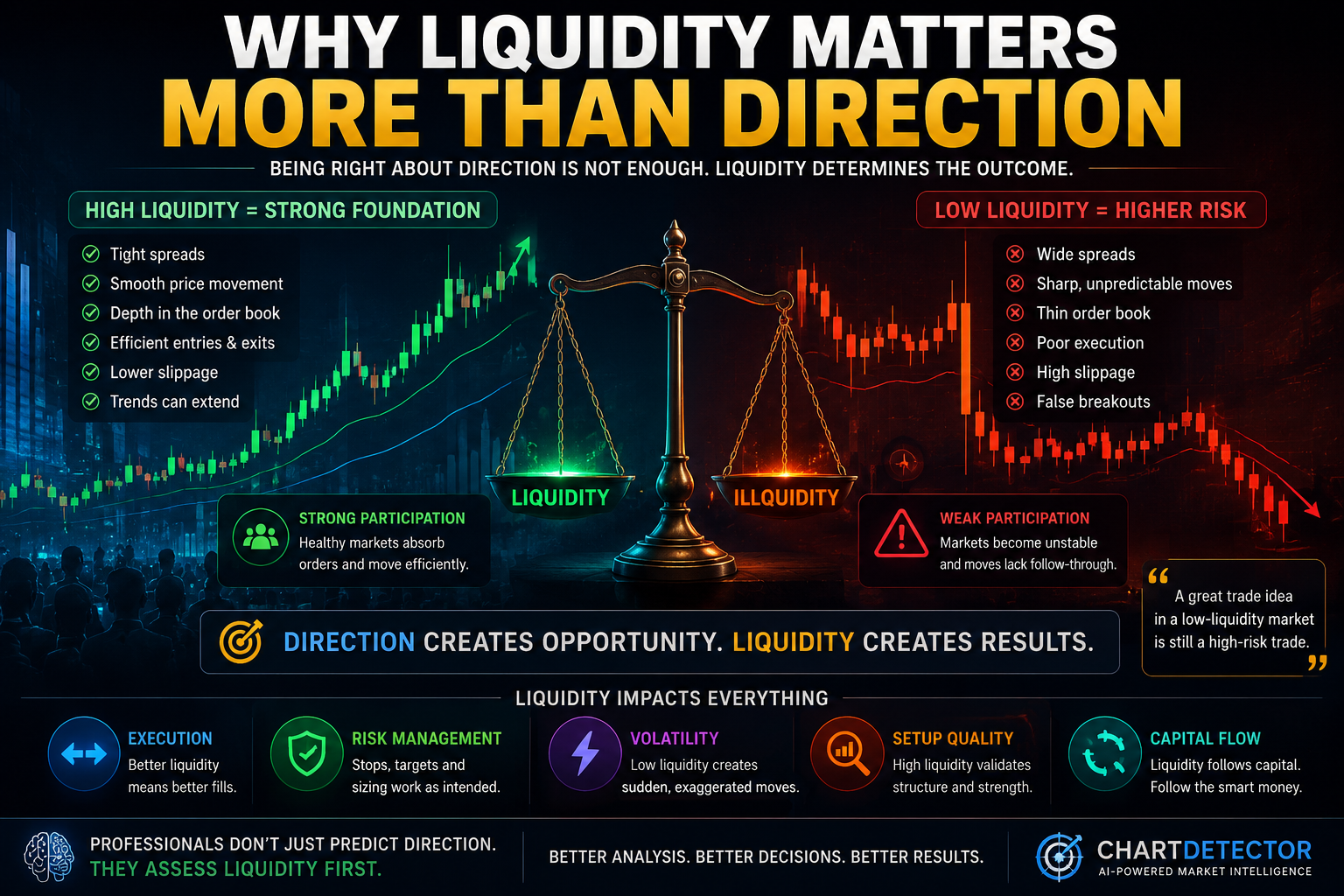
Why Liquidity Matters More Than Direction
Most traders focus on whether a market will move higher or lower. Professional traders focus on liquidity. This article explains why liquidity drives price movement, how it influences risk, and why being right about direction is often not enough.
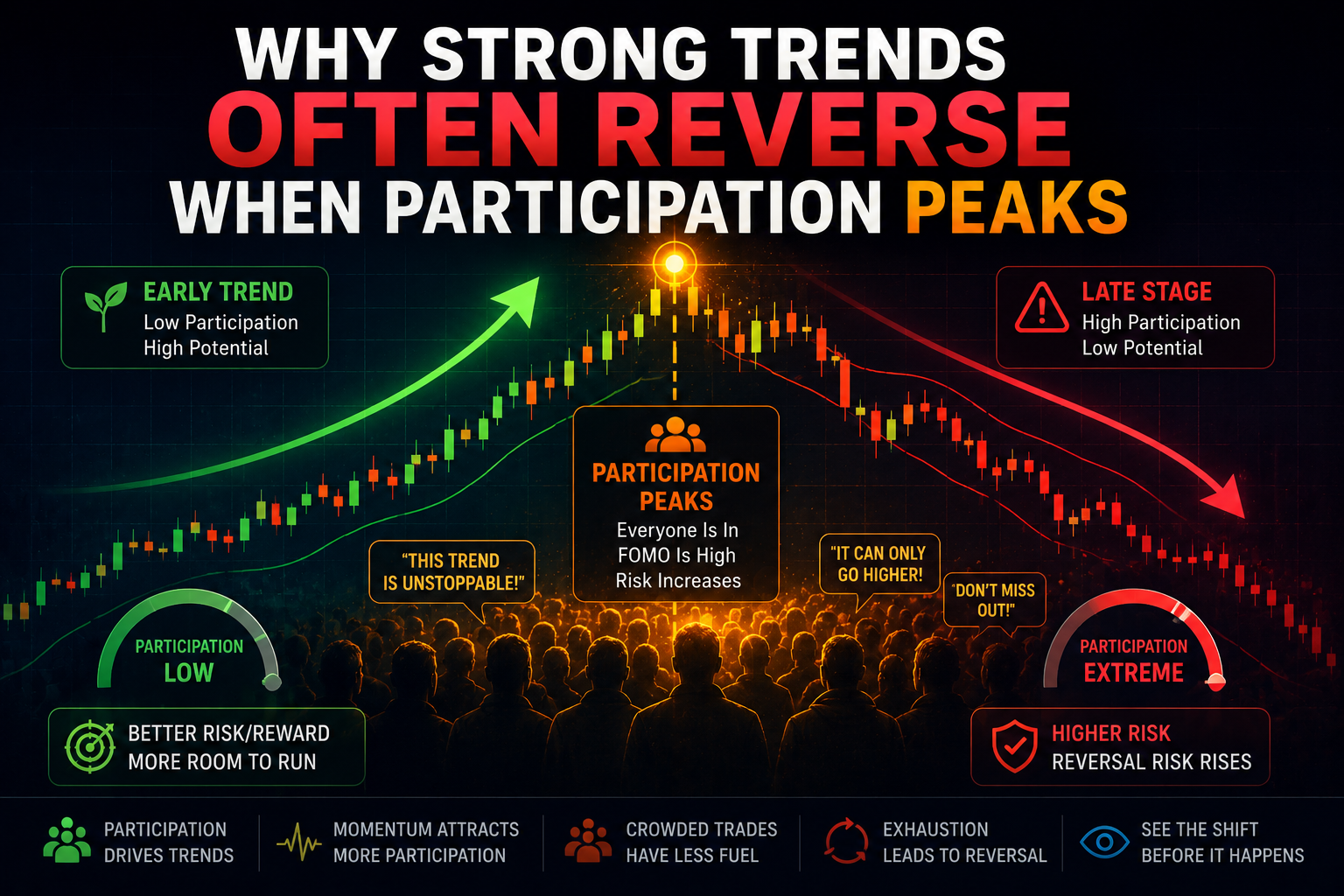
Why Strong Trends Often Reverse When Participation Peaks
Strong trends often appear safest near their peak, yet this is frequently where reversal risk begins increasing. This article explains how participation saturation develops and why late-stage momentum can weaken market structure.