
Why Strong Trends Often Begin With Discomfort
Strong trends rarely begin in clear, comfortable conditions. They often emerge from uncertainty, failed expectations, and structural tension. This article explains why early trend development feels uncomfortable and how professionals recognize imbalance before it becomes obvious.
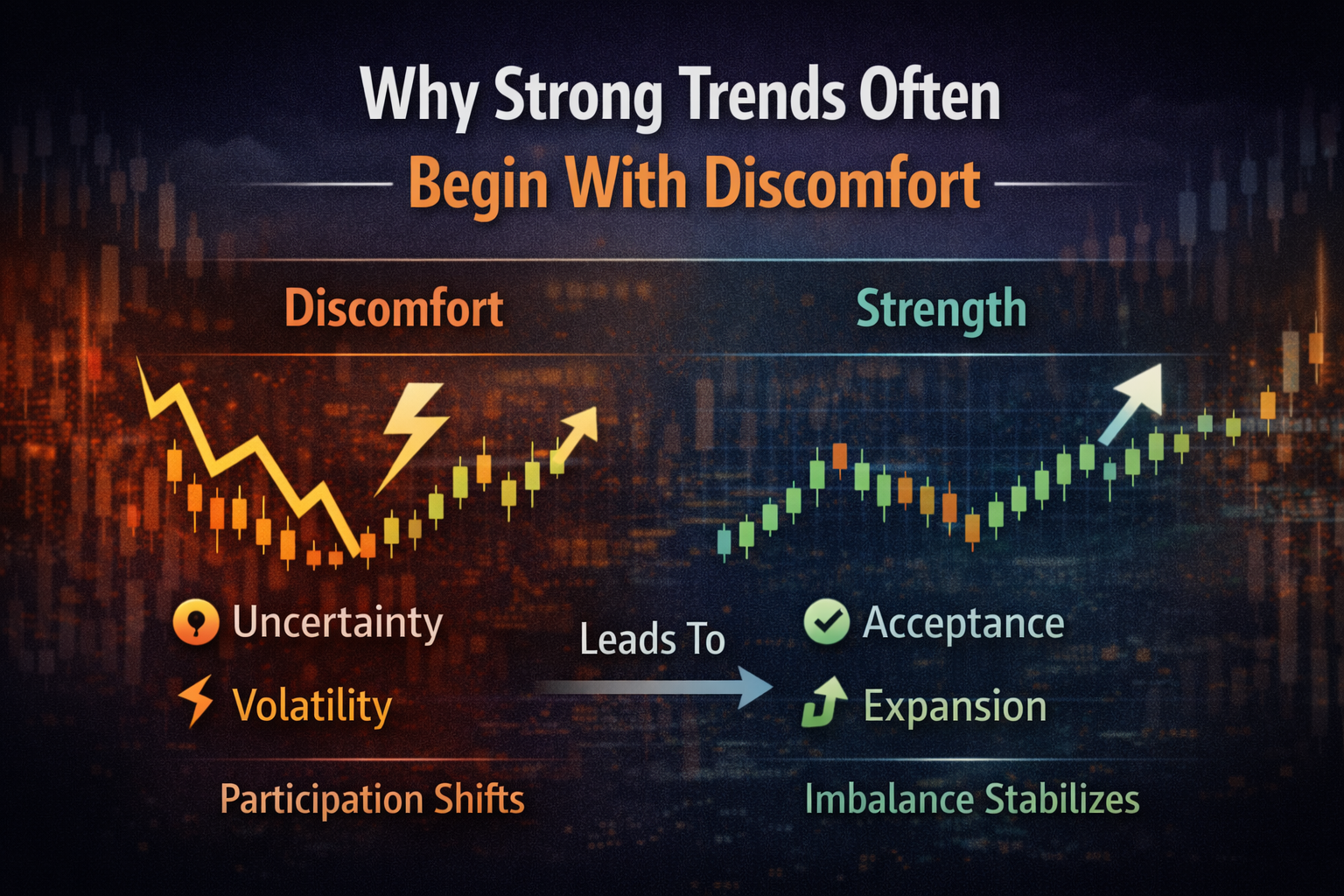
Strong market trends rarely begin in conditions that feel clear, orderly, or comfortable. In fact, the early stages of powerful directional movement are often characterized by uncertainty, failed expectations, and structural tension. Traders naturally prefer environments where price action appears clean and momentum is obvious, yet professional traders understand that these conditions typically develop only after imbalance has already formed.
Trend development begins with a shift in participation rather than with visual clarity. Before a sustained directional move becomes apparent, buyers or sellers begin accumulating positions while broader market consensus remains divided. During this transitional phase, price may fluctuate within a range, produce failed breakouts, or expand volatility in a way that feels unstable rather than decisive. This behavior is frequently misinterpreted as weakness or randomness, when in reality it may represent early structural change.
Discomfort emerges because markets must redistribute risk before they can trend. Participants who entered early often take partial profits, opposing positions attempt to defend prior structure, and late entrants hesitate. These interactions create friction that temporarily masks developing imbalance. Retail traders often interpret this friction as failure and wait for confirmation that feels safer. By the time clarity arrives, however, much of the imbalance has already been expressed, and the opportunity profile becomes less favorable.
Professional traders recognize that imbalance does not announce itself with certainty. It reveals itself gradually through subtle behavioral shifts. Failed breakdowns that recover quickly, shallow pullbacks in emerging strength, or persistent higher lows despite volatility all signal that participation may be changing beneath the surface. These observations require patience and structural awareness rather than reactive interpretation of individual candles.
It is important to acknowledge that not every uncomfortable phase leads to a sustained trend. Many periods of volatility resolve back into balance. The distinction lies in post-expansion behavior. When price sustains activity beyond prior structure and pullbacks become controlled rather than chaotic, imbalance is stabilizing. Acceptance beyond former levels provides more information than the initial breakout itself.
This perspective alters how early trend phases are evaluated. Instead of chasing comfort and consensus, professional traders monitor how price behaves after expansion and whether participation supports continuation. They assess structural resilience rather than seeking immediate smoothness. In doing so, they position themselves closer to the origin of movement rather than its most visible stage.
ChartDetector evaluates structural behavior within this same framework by distinguishing between exploratory movement and developing imbalance. This reduces the tendency to equate clarity with opportunity and instead emphasizes behavioral consistency after structural tension appears.
Strong trends are obvious only in hindsight. At their inception, they frequently feel unstable and uncomfortable. Recognizing this dynamic helps traders avoid waiting for perfect confirmation, which typically arrives after risk-reward has compressed. The next time market behavior feels tense rather than orderly, the more productive question may be whether discomfort reflects failure or the early stages of imbalance forming beneath the surface.
Related Articles

Why Markets Punish Consensus
When everyone agrees on where the market is going, the opportunity is often already diminishing. This article explains why consensus creates comfort but rarely creates edge, and why professional traders pay close attention to crowd positioning.
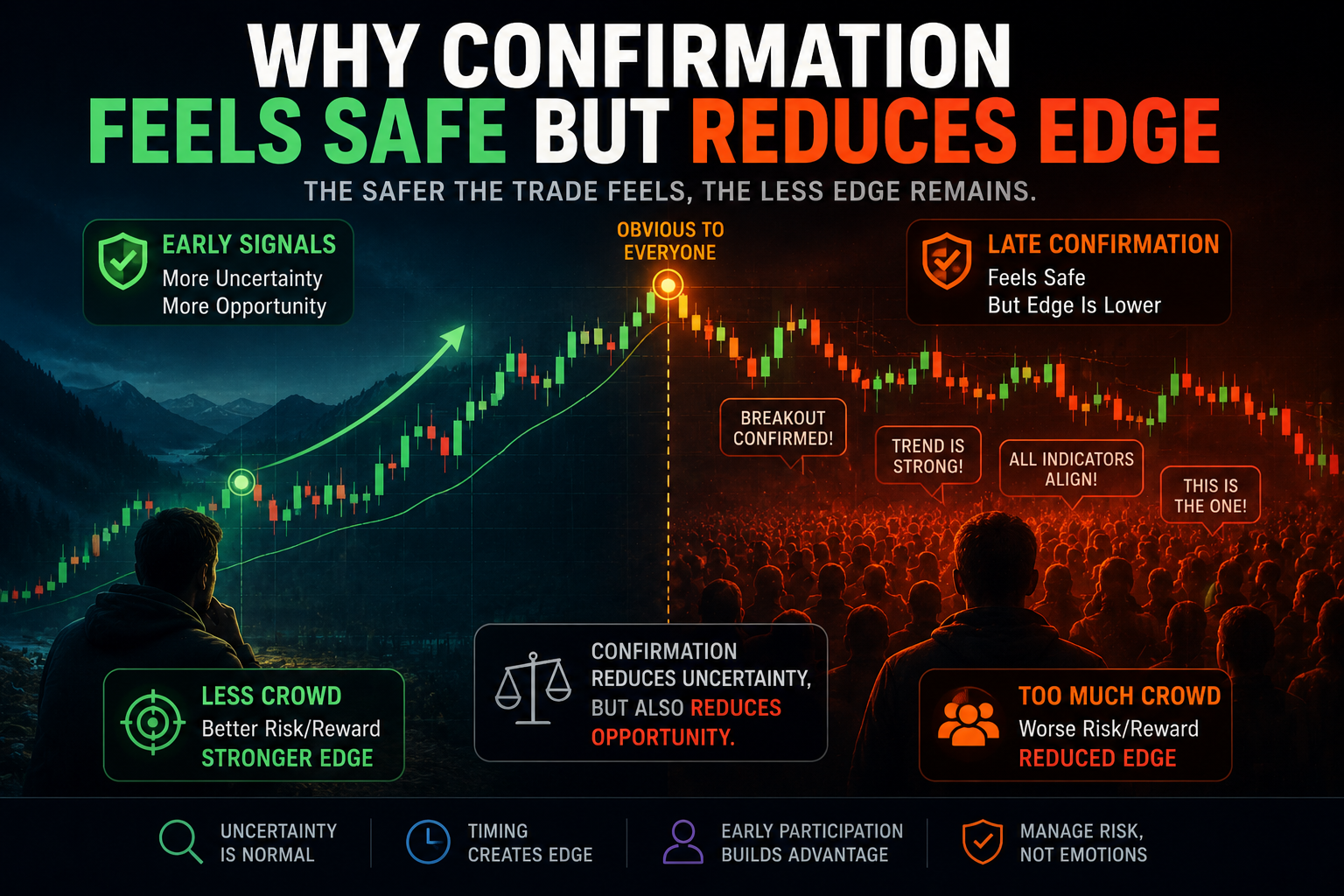
Why Confirmation Feels Safe But Reduces Edge
Confirmation reduces uncertainty, but it often reduces opportunity as well. This article explains why traders naturally seek confirmation, how it leads to crowded positioning, and why professional traders balance validation with timing.
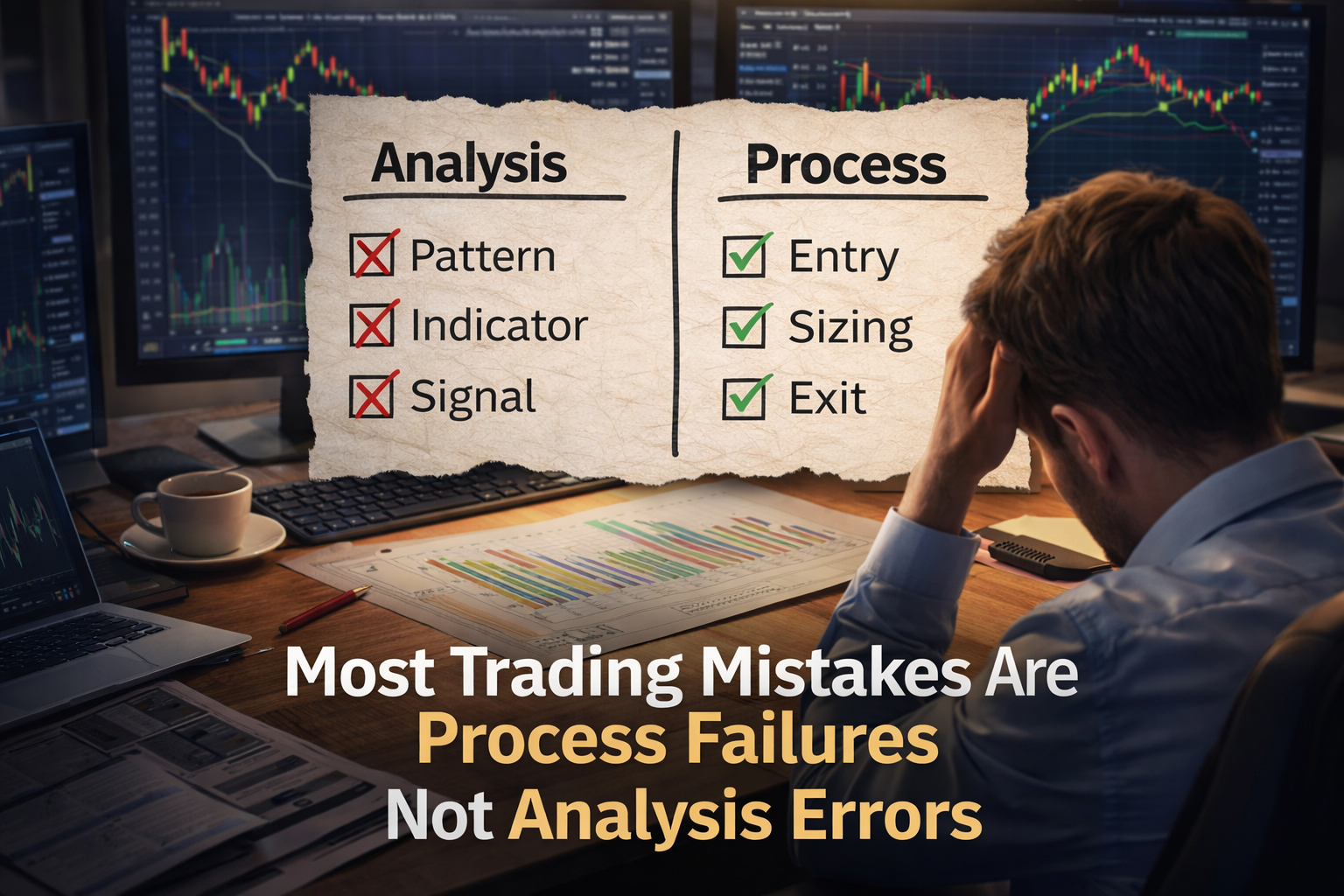
Why Most Trading Mistakes Are Process Failures Not Analysis Errors
Traders often blame losses on bad analysis, yet most mistakes come from poor execution of a sound process. This article explains why process breakdowns matter more than analysis errors and how professionals build consistency through structure.